
World
Trump’s Stance on Iran Sparks Controversy Over Moral Integrity

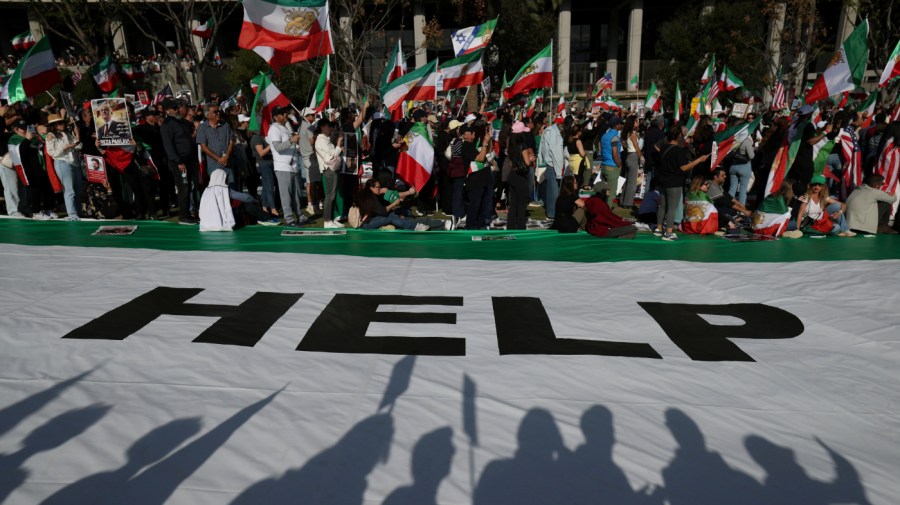
Former President Donald Trump has drawn sharp criticism for his recent comments regarding Iran, suggesting that the United States has not genuinely supported the protesters who have risked their lives for democratic reforms. This controversy raises important questions about the U.S. administration’s commitment to human rights in the region.
During a recent interview, Trump asserted that the U.S. did not actually prioritize the safety and aspirations of Iranian protesters. This statement comes in the wake of protests that erupted in Iran in late 2023, where demonstrators took to the streets demanding an end to oppressive government practices. By implying a lack of concern, Trump’s remarks have sparked backlash from both political opponents and human rights advocates.
Critics argue that Trump’s comments reflect a troubling trend in U.S. foreign policy, particularly concerning human rights and moral integrity. The U.S. State Department had previously expressed support for the protesters, who have faced violent crackdowns. The contradiction between Trump’s statements and the official stance raises significant ethical implications for how the U.S. engages with authoritarian regimes.
The protests in Iran, which began in response to the government’s treatment of women and political dissidents, have resulted in numerous casualties. Activists estimate that more than 200 protesters have been killed since the demonstrations began. The international community, including various human rights organizations, has called for accountability and support for the demonstrators.
Trump’s comments underscore a broader concern about the U.S. approach to foreign policy. Many analysts suggest that his moral ambiguity could hinder the U.S.’s ability to effectively advocate for democratic values abroad. Human Rights Watch and other organizations have expressed disappointment, stating that such rhetoric undermines the efforts of those bravely standing against oppression.
While in office, Trump often adopted a transactional view of international relations, prioritizing economic interests over ethical considerations. This approach has led to a perception of moral inconsistency that may disadvantage U.S. credibility, particularly in the Middle East. Observers note that maintaining a principled stance is crucial in a region where support for democratic movements can significantly influence geopolitical dynamics.
Moreover, Trump’s critics within the Republican Party have voiced their concerns, highlighting the potential risks of alienating allies who rely on U.S. support for their democratic aspirations. By dismissing the sacrifices of Iranian protesters, Trump may inadvertently weaken the U.S.’s position as a champion of democracy in the eyes of both allies and adversaries.
As the situation in Iran continues to evolve, the implications of Trump’s remarks will likely resonate in both political and humanitarian discussions. Observers are closely monitoring how this narrative develops, especially as the Biden administration seeks to balance support for human rights with strategic interests in the region.
In conclusion, Trump’s statements regarding Iran reflect a complex interplay of politics and morality. The response from both domestic and international communities highlights the critical need for a consistent and principled U.S. foreign policy. As the Iranian protests persist, the global audience will be watching how leaders address these pressing human rights issues and the broader implications for international relations.

Philadelphia Parks Launch Free Earth Month Events Starting April 1

Bradford’s Fish Fry Fridays Serve Community with Delicious Dinners

Trump Faces Growing Challenges Amid Rising Tensions with Iran

Scientists Probe the Universe’s Missing Topological Defects

Samsung Galaxy Watch 9 to Feature Larger 435mAh Battery

UConn Huskies Aim to Defend Title in 2026 NCAA Women’s Tournament

U.S. Littoral Combat Ships Dock in Malaysia Amid Regional Tensions

Healthy Choice Wellness Reports Quarterly Earnings, Shares Rise

Urgent News: Charles M. Payment Passes Away at 78 in Duluth

University of Hawaiʻi Joins $25.6M AI Project to Enhance Disaster Monitoring

Major Grant Enhances Cancer Care and Research in Hawaiʻi

Joleen Chaney, Beloved Journalist, Passes Leaving Lasting Legacy

San Francisco’s SFO to Welcome 16 Airlines with Nonstop Flights to Europe in 2026

Goldman Sachs Unveils 2026 Catalyst Playbook for Biotech Investors

Discover Top Business Smartphones for Professionals in 2026

Urgent Update: Tom Aspinall’s Vision Deteriorates After UFC 321

Texas Roadhouse Honors Veterans with Free Meal Vouchers

CD Projekt Red Confirms No Release for The Witcher 4 in 2026
-
Science9 months ago
University of Hawaiʻi Joins $25.6M AI Project to Enhance Disaster Monitoring
-
 Health8 months ago
Major Grant Enhances Cancer Care and Research in Hawaiʻi
-
 Top Stories9 months ago
Joleen Chaney, Beloved Journalist, Passes Leaving Lasting Legacy
-
 World7 months ago
San Francisco’s SFO to Welcome 16 Airlines with Nonstop Flights to Europe in 2026
-
 Business8 months ago
Goldman Sachs Unveils 2026 Catalyst Playbook for Biotech Investors
-
 Business8 months ago
Discover Top Business Smartphones for Professionals in 2026
-
 Top Stories10 months ago
Urgent Update: Tom Aspinall’s Vision Deteriorates After UFC 321
-
 Lifestyle9 months ago
Texas Roadhouse Honors Veterans with Free Meal Vouchers
-
 Entertainment9 months ago
CD Projekt Red Confirms No Release for The Witcher 4 in 2026
-

 Top Stories10 months ago
AI Disruption: AWS Faces Threat as Startups Shift Cloud Focus
-

 Health10 months ago
MIT Scientists Uncover Surprising Genomic Loops During Cell Division
-

 Entertainment10 months ago
Discover the Full Map of Pokémon Legends: Z-A’s Lumiose City