
World
UK Secures $1.3 Billion Contract with Leonardo for New Helicopters

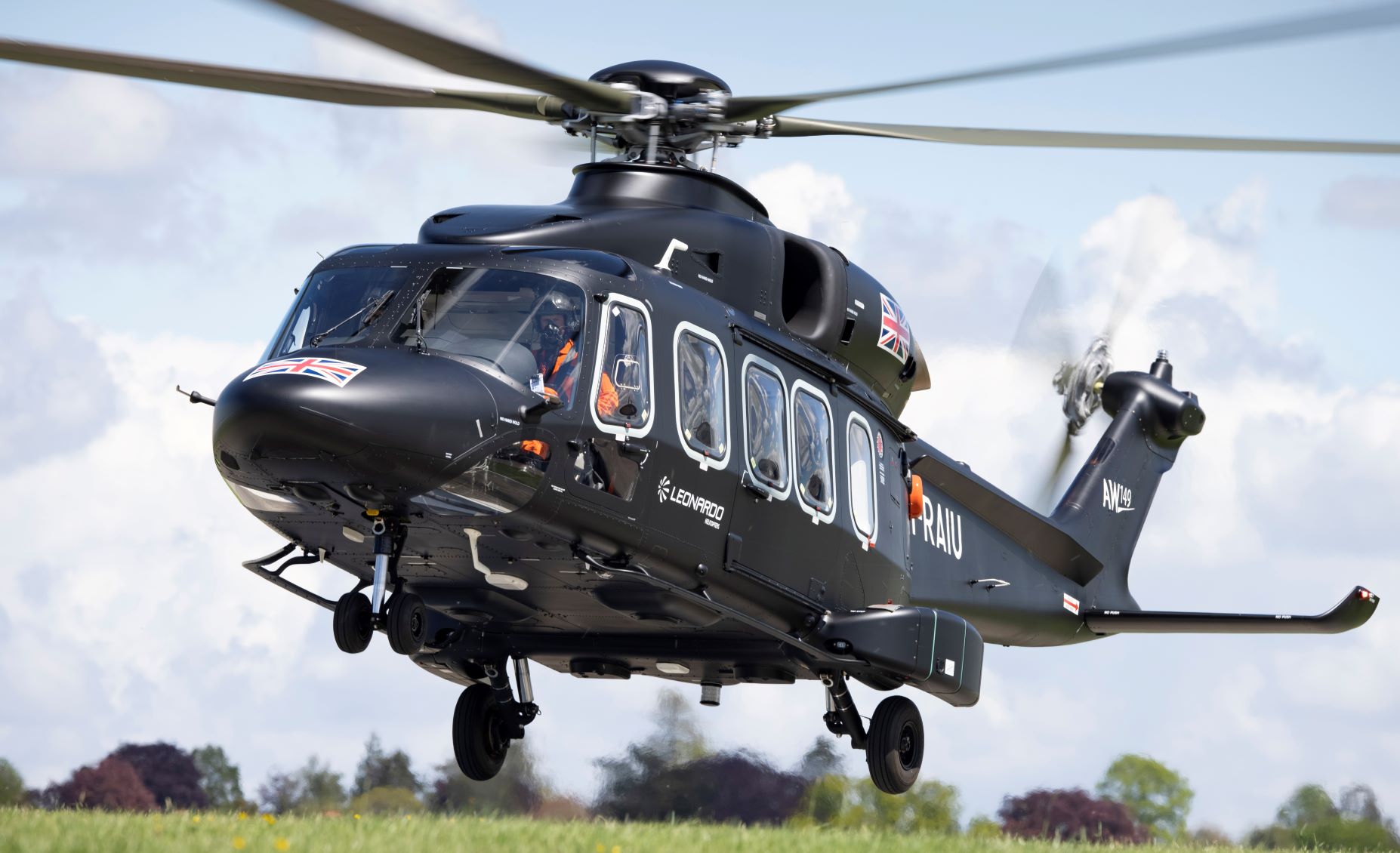
The United Kingdom has awarded a significant contract worth £1 billion ($1.3 billion) to Leonardo for the production of 23 AW149 multirole helicopters. This decision provides much-needed clarity for the manufacturer’s production line in Yeovil, England, following months of uncertainty surrounding the high-profile procurement.
The UK Ministry of Defence (MoD) announced that the new AW149 helicopters will enhance defence capabilities by operating alongside drones for various defence operations worldwide. Additionally, the MoD has committed to further investment in Leonardo’s Proteus autonomous rotary wing demonstrator, although specific financial details and a delivery timeline for the AW149 remain undisclosed.
Helicopter Capabilities and Strategic Importance
The AW149 is designed to carry up to 16 fully equipped troops and boasts a range of 545 nautical miles. Its versatility allows it to perform multiple roles, including battlefield support, troop transport, logistics support, threat suppression, Close Air Support (CAS), Command and Control (C2), Search and Rescue (SAR), Medical Evacuation (MEDEVAC), and maritime patrol operations. According to Leonardo’s company literature, the NMH program aims to replace 23 Puma HC2 helicopters, alongside various smaller rotary fleets such as the Bell 212, Bell 412, and Airbus AS365 Dauphin.
The urgency of this contract is underscored by the impending retirement of the Puma fleet in March 2025, which leaves a significant gap in the UK’s helicopter capabilities. In its statement, the MoD emphasized that the new deal strengthens the UK Armed Forces and positions Britain as Leonardo’s global centre for military helicopter production and exports. This initiative could potentially generate up to £15 billion over the next decade.
Contract Negotiations and Future Prospects
The announcement follows a critical period of negotiation, culminating a day after Leonardo submitted its final offer for the NMH contract. The MoD noted that the AW149 program will streamline operations by fulfilling multiple rotary wing requirements with a single aircraft type, thereby consolidating capabilities previously provided by three different aircraft.
Leonardo’s proposal included relocating its AW149 export production line from Vergiate, Italy, to Yeovil. The company also highlighted the opportunity to target an addressable market exceeding 500 medium-class helicopters for potential future export sales. International customers for the AW149 include Egypt, Poland, and Thailand.
As the only local defence helicopter manufacturer in the UK, Leonardo faced uncertainty leading up to the NMH award due to a dispute between the MoD and the Treasury, which questioned the program’s prioritization. However, intervention from Rachel Reeves, the Chancellor of the Exchequer, facilitated the approval of the contract just last week.
Originally, the MoD planned to award the NMH contract in 2025, but delays pushed the decision into the forthcoming Defence Investment Plan (DIP), which will outline British equipment priorities for the next decade. Although this plan was expected to be published last year, the MoD has only committed to releasing it “as soon as possible.”
Leonardo emerged as the sole remaining bidder in a competitive process that initially included Lockheed Martin UK and Airbus UK, both of which withdrew their interest in August 2024, citing challenges in meeting customer requirements. In recent reports, it was noted that the UK had reduced the expected order of NMH aircraft to between 25 and 35 units, a decrease from the previously advertised maximum of 44 platforms.
Additionally, the Proteus demonstrator project is part of a four-year Rotary Wing Uncrewed Air System Technology Demonstration Programme contract valued at £60 million. This effort aligns with the Royal Navy’s Maritime Aviation Transformation strategy, a long-term plan for Fleet Air Arm evolution extending to 2040.
The £1 billion contract marks a pivotal moment for the UK’s military helicopter capabilities, ensuring that the armed forces are equipped with modern and versatile rotorcraft to meet future operational demands.

Philadelphia Parks Launch Free Earth Month Events Starting April 1

Bradford’s Fish Fry Fridays Serve Community with Delicious Dinners

Trump Faces Growing Challenges Amid Rising Tensions with Iran

Scientists Probe the Universe’s Missing Topological Defects

Samsung Galaxy Watch 9 to Feature Larger 435mAh Battery

UConn Huskies Aim to Defend Title in 2026 NCAA Women’s Tournament

U.S. Littoral Combat Ships Dock in Malaysia Amid Regional Tensions

Healthy Choice Wellness Reports Quarterly Earnings, Shares Rise

Urgent News: Charles M. Payment Passes Away at 78 in Duluth

University of Hawaiʻi Joins $25.6M AI Project to Enhance Disaster Monitoring

Major Grant Enhances Cancer Care and Research in Hawaiʻi

Joleen Chaney, Beloved Journalist, Passes Leaving Lasting Legacy

San Francisco’s SFO to Welcome 16 Airlines with Nonstop Flights to Europe in 2026

Goldman Sachs Unveils 2026 Catalyst Playbook for Biotech Investors

Discover Top Business Smartphones for Professionals in 2026

Urgent Update: Tom Aspinall’s Vision Deteriorates After UFC 321

Texas Roadhouse Honors Veterans with Free Meal Vouchers

CD Projekt Red Confirms No Release for The Witcher 4 in 2026
-
Science9 months ago
University of Hawaiʻi Joins $25.6M AI Project to Enhance Disaster Monitoring
-
 Health8 months ago
Major Grant Enhances Cancer Care and Research in Hawaiʻi
-
 Top Stories9 months ago
Joleen Chaney, Beloved Journalist, Passes Leaving Lasting Legacy
-
 World7 months ago
San Francisco’s SFO to Welcome 16 Airlines with Nonstop Flights to Europe in 2026
-
 Business8 months ago
Goldman Sachs Unveils 2026 Catalyst Playbook for Biotech Investors
-
 Business8 months ago
Discover Top Business Smartphones for Professionals in 2026
-
 Top Stories9 months ago
Urgent Update: Tom Aspinall’s Vision Deteriorates After UFC 321
-
 Lifestyle9 months ago
Texas Roadhouse Honors Veterans with Free Meal Vouchers
-
 Entertainment8 months ago
CD Projekt Red Confirms No Release for The Witcher 4 in 2026
-

 Top Stories10 months ago
AI Disruption: AWS Faces Threat as Startups Shift Cloud Focus
-

 Health10 months ago
MIT Scientists Uncover Surprising Genomic Loops During Cell Division
-

 Entertainment10 months ago
Discover the Full Map of Pokémon Legends: Z-A’s Lumiose City