
Politics
Europe Considers Trade Retaliation Amid U.S. Tariff Threats

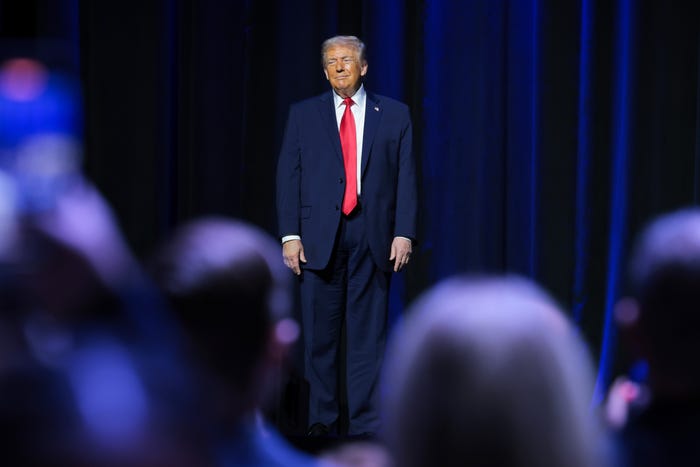
The European Union is contemplating a significant trade response, referred to as a “trade bazooka,” should President Donald Trump escalate his ongoing tariff threats. This comes in light of Trump’s recent announcement of a potential additional 10% tariff on EU countries unless they agree to a deal regarding the control of Greenland.
During the World Economic Forum in Davos, French President Emmanuel Macron advocated for the activation of this anti-coercion mechanism, emphasizing its potential as a robust tool against economic pressure. “The anti-coercion mechanism is a powerful instrument, and we should not hesitate to deploy it in today’s tough environment,” Macron stated.
The mechanism, established in 2023, would empower the EU to impose tariffs on imports and restrict services from the U.S. This could particularly impact sectors where the U.S. currently holds a competitive edge, such as pharmaceuticals, technology, and financial services. While tariffs typically focus on goods, this tool has the potential to disrupt the services sector, which has been a stronghold for the U.S. economy.
In 2024, the United States exported $1.1 trillion in services, according to data from the St. Louis Federal Reserve. This figure reflects a longstanding trend over the past five decades, with the U.S. maintaining a surplus in services despite a trade deficit in goods. The Bureau of Economic Analysis also reported that the U.S. exported $489 billion in services to Europe that same year.
Concerns about the implications of Trump’s tariff threats are mounting. Alex Durante, a senior economist at the nonpartisan Tax Foundation, described the situation as “uncharted territory.” He warned that the U.S.’s international standing could be at risk if aggressive tariff measures are pursued. “America really would lose whatever standing it still has in the world if it were to go forward and do something like that,” Durante noted.
In his latest statements, Trump identified eight European nations, including Denmark, Germany, France, and the United Kingdom, as potential targets for increased tariffs if they do not accept his Greenland proposal. He has indicated that tariffs on these countries could rise to 25% by June if no agreement is reached.
The EU’s anti-coercion tool is designed to be broad, allowing for a swift response to economic coercion with minimal impact on the European economy. This tool could restrict access to EU markets for U.S.-based service exporters, including major technology firms and financial institutions. The EU Commission has outlined that the mechanism would activate in response to pressure placed on its member states through trade threats.
Durante highlighted that intellectual property issues may also arise, as the EU could limit certain licenses for U.S. firms and restrict access for American banks in European markets. He noted that various sectors have been insulated from tariff impacts due to exemptions currently in place.
If Trump’s proposed tariffs are enacted, American consumers will likely face higher prices on affected goods. A report from the Kiel Institute for the World Economy revealed that between January 2024 and November 2025, 96% of U.S. tariffs have been borne by U.S. consumers.
Implementing the EU’s anti-coercion mechanism would require time, with the Commission stating it would take up to four months to assess allegations and an additional six months to determine a suitable response. As the situation develops, the Trump administration is also awaiting a ruling from the Supreme Court regarding the legality of many of the president’s tariffs, which could further limit his options for future trade actions.
The implications of this ongoing trade tension extend to American workers as well. Durante pointed out that the anti-coercion tool could affect “natively American firms,” diminishing their market access and profitability. He cautioned that such a tit-for-tat approach could quickly escalate, potentially harming citizens in both the EU and the U.S.
This evolving situation underscores the fragility of international trade relations and the potential for significant economic consequences resulting from diplomatic disputes.

Philadelphia Parks Launch Free Earth Month Events Starting April 1

Bradford’s Fish Fry Fridays Serve Community with Delicious Dinners

Trump Faces Growing Challenges Amid Rising Tensions with Iran

Scientists Probe the Universe’s Missing Topological Defects

Samsung Galaxy Watch 9 to Feature Larger 435mAh Battery

UConn Huskies Aim to Defend Title in 2026 NCAA Women’s Tournament

U.S. Littoral Combat Ships Dock in Malaysia Amid Regional Tensions

Healthy Choice Wellness Reports Quarterly Earnings, Shares Rise

Urgent News: Charles M. Payment Passes Away at 78 in Duluth

University of Hawaiʻi Joins $25.6M AI Project to Enhance Disaster Monitoring

Major Grant Enhances Cancer Care and Research in Hawaiʻi

Joleen Chaney, Beloved Journalist, Passes Leaving Lasting Legacy

San Francisco’s SFO to Welcome 16 Airlines with Nonstop Flights to Europe in 2026

Goldman Sachs Unveils 2026 Catalyst Playbook for Biotech Investors

Discover Top Business Smartphones for Professionals in 2026

Urgent Update: Tom Aspinall’s Vision Deteriorates After UFC 321

Texas Roadhouse Honors Veterans with Free Meal Vouchers

CD Projekt Red Confirms No Release for The Witcher 4 in 2026
-
Science9 months ago
University of Hawaiʻi Joins $25.6M AI Project to Enhance Disaster Monitoring
-
 Health8 months ago
Major Grant Enhances Cancer Care and Research in Hawaiʻi
-
 Top Stories9 months ago
Joleen Chaney, Beloved Journalist, Passes Leaving Lasting Legacy
-
 World7 months ago
San Francisco’s SFO to Welcome 16 Airlines with Nonstop Flights to Europe in 2026
-
 Business8 months ago
Goldman Sachs Unveils 2026 Catalyst Playbook for Biotech Investors
-
 Business8 months ago
Discover Top Business Smartphones for Professionals in 2026
-
 Top Stories9 months ago
Urgent Update: Tom Aspinall’s Vision Deteriorates After UFC 321
-
 Lifestyle9 months ago
Texas Roadhouse Honors Veterans with Free Meal Vouchers
-
 Entertainment8 months ago
CD Projekt Red Confirms No Release for The Witcher 4 in 2026
-

 Top Stories10 months ago
AI Disruption: AWS Faces Threat as Startups Shift Cloud Focus
-

 Health10 months ago
MIT Scientists Uncover Surprising Genomic Loops During Cell Division
-

 Entertainment10 months ago
Discover the Full Map of Pokémon Legends: Z-A’s Lumiose City