
Health
Moderna Executive Warns of Diminishing Vaccine Innovation in U.S.

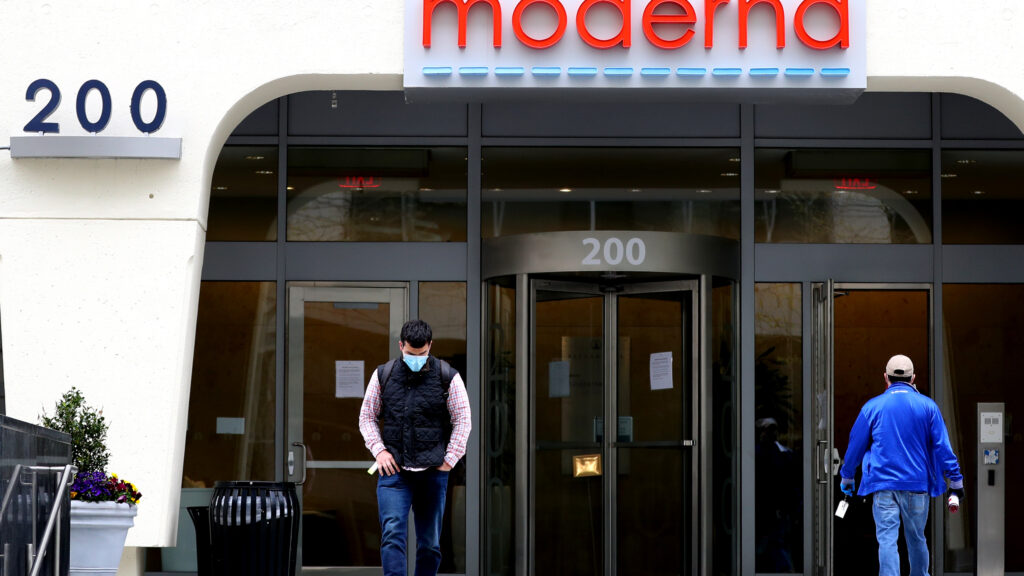
In a recent reflection, former Moderna executive Richard Hughes IV expressed concern over the current state of vaccine innovation in the United States. He noted that the once-promising landscape for vaccine development has faced significant challenges, particularly following the U.S. Food and Drug Administration’s (FDA) refusal to review Moderna’s application for its mRNA flu vaccine.
On December 30, 2020, Hughes took his first steps into a new reality as he received a COVID-19 vaccine at Moderna’s manufacturing site near Boston. At that time, the company was at the forefront of a medical breakthrough, mobilizing to address a global health crisis. The atmosphere was charged with hope, and Hughes recalls feeling a profound sense of connection with the healthcare professionals involved.
Moderna had positioned itself as a leader in vaccine technology, leveraging its mRNA platform to address various diseases. Hughes described the excitement within the company as it accelerated projects that had long been in the pipeline. For example, the company was investing in vaccines for cytomegalovirus and respiratory syncytial virus (RSV), both of which posed significant health risks.
Today, however, Hughes warns that a “chilling reality” has set in. He attributes the shift to a growing atmosphere of regulatory unpredictability, particularly under the leadership of U.S. Health Secretary Robert F. Kennedy Jr.. According to Hughes, Kennedy’s actions have undermined public confidence in vaccines, promoting discredited safety claims while attacking both healthcare professionals and vaccine manufacturers.
The FDA’s recent decision to halt the review of Moderna’s flu vaccine is seen as part of a broader trend that could discourage investment in vaccine development. Hughes pointed out that Moderna’s CEO has already stated that the company will not pursue new Phase 3 trials for infectious diseases, citing the need for a stable regulatory environment to justify such investments.
The implications of these regulatory shifts are significant. Hughes argues that the United States has historically been a leader in vaccine innovation, not just because of scientific expertise, but due to a trusted regulatory framework. He warns that if this trust erodes, companies may choose to innovate in more stable environments, leaving American patients at a disadvantage.
Hughes emphasizes that the pharmaceutical industry should not be viewed as an adversary. He highlights the symbiotic relationship between public health and industry success, asserting that when companies thrive, public health benefits.
As the United States grapples with these challenges, Hughes urges a return to evidence-based approaches. He stresses that neglecting to support vaccine innovation will have long-term consequences, resulting in preventable illnesses and lost opportunities for public health advancement.
In conclusion, the current state of vaccine innovation in the U.S. requires careful attention. Hughes’s insights underscore the need for a stable regulatory environment that fosters trust and encourages investment in life-saving technologies. The future of public health may depend on the choices made today regarding vaccine development and regulatory policies.

Philadelphia Parks Launch Free Earth Month Events Starting April 1

Bradford’s Fish Fry Fridays Serve Community with Delicious Dinners

Trump Faces Growing Challenges Amid Rising Tensions with Iran

Scientists Probe the Universe’s Missing Topological Defects

Samsung Galaxy Watch 9 to Feature Larger 435mAh Battery

UConn Huskies Aim to Defend Title in 2026 NCAA Women’s Tournament

U.S. Littoral Combat Ships Dock in Malaysia Amid Regional Tensions

Healthy Choice Wellness Reports Quarterly Earnings, Shares Rise

Urgent News: Charles M. Payment Passes Away at 78 in Duluth

University of Hawaiʻi Joins $25.6M AI Project to Enhance Disaster Monitoring

Major Grant Enhances Cancer Care and Research in Hawaiʻi

Joleen Chaney, Beloved Journalist, Passes Leaving Lasting Legacy

San Francisco’s SFO to Welcome 16 Airlines with Nonstop Flights to Europe in 2026

Goldman Sachs Unveils 2026 Catalyst Playbook for Biotech Investors

Discover Top Business Smartphones for Professionals in 2026

Urgent Update: Tom Aspinall’s Vision Deteriorates After UFC 321

Texas Roadhouse Honors Veterans with Free Meal Vouchers

CD Projekt Red Confirms No Release for The Witcher 4 in 2026
-
Science9 months ago
University of Hawaiʻi Joins $25.6M AI Project to Enhance Disaster Monitoring
-
 Health8 months ago
Major Grant Enhances Cancer Care and Research in Hawaiʻi
-
 Top Stories9 months ago
Joleen Chaney, Beloved Journalist, Passes Leaving Lasting Legacy
-
 World7 months ago
San Francisco’s SFO to Welcome 16 Airlines with Nonstop Flights to Europe in 2026
-
 Business8 months ago
Goldman Sachs Unveils 2026 Catalyst Playbook for Biotech Investors
-
 Business7 months ago
Discover Top Business Smartphones for Professionals in 2026
-
 Top Stories9 months ago
Urgent Update: Tom Aspinall’s Vision Deteriorates After UFC 321
-
 Lifestyle9 months ago
Texas Roadhouse Honors Veterans with Free Meal Vouchers
-
 Entertainment8 months ago
CD Projekt Red Confirms No Release for The Witcher 4 in 2026
-

 Top Stories10 months ago
AI Disruption: AWS Faces Threat as Startups Shift Cloud Focus
-

 Health10 months ago
MIT Scientists Uncover Surprising Genomic Loops During Cell Division
-

 Entertainment10 months ago
Discover the Full Map of Pokémon Legends: Z-A’s Lumiose City