
Science
NOAA Unveils Key Scientific Advancements in 2025 Report

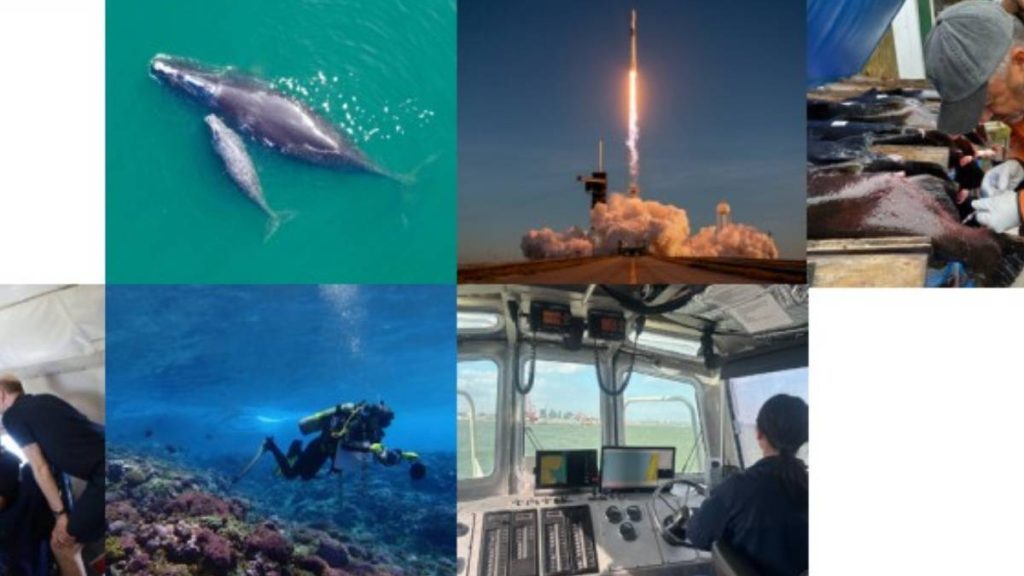
The National Oceanic and Atmospheric Administration (NOAA) has released its 2025 Science Report, highlighting significant scientific advancements aimed at enhancing weather predictions and promoting environmental stewardship. The report details groundbreaking initiatives, including satellite launches, unmanned systems for data collection, and innovative technologies to monitor marine ecosystems and atmospheric conditions.
Advancements in Space Weather Observations
One of the standout achievements is the successful launch of the Space Weather Follow On-Lagrange 1 (SWFO-L1) satellite in September 2025 from Kennedy Space Center in Florida. Now renamed SOLAR-1, this satellite is equipped with cutting-edge instruments, such as the Compact Coronagraph-2. Its primary role is to serve as an early warning system for coronal mass ejections and other solar events that could impact Earth.
These space weather phenomena can jeopardize astronaut safety, disrupt aviation operations, and affect electric power grids and communication systems. Data collected from SOLAR-1 will augment the alerts and forecasts provided by the NOAA Space Weather Prediction Center, benefiting sectors such as agriculture, defense, and human spaceflight.
Rapid Response to California’s Wildfires
In a proactive response to the devastating wildfires in Los Angeles, NOAA researchers rapidly collected debris and water samples from the California coast. During this critical period, they altered an ongoing fisheries survey aboard the NOAA Ship Reuben Lasker to better understand the impact of the fires on ocean ecosystems.
The information gathered will aid in assessing how these fires affect one of the nation’s most productive marine environments, vital for both commercial and recreational fisheries. This initiative underscores NOAA’s commitment to understanding the interconnectedness of terrestrial and marine ecosystems.
Innovative Data Collection Techniques in Hurricanes
NOAA has also made strides in hurricane research by testing new instruments designed to gather data from within tropical cyclones. The Black Swift S0 drone, deployed from NOAA’s WP-3D Hurricane Hunter aircraft, has set new records for data collection during hurricanes. It captures critical atmospheric data from the lowest levels of storms.
Another notable tool is the Skyfora StreamSonde, which descends more slowly than traditional dropsondes, enabling it to gather more detailed atmospheric information. Notably, one dropsonde recorded a wind gust of 252 mph during Hurricane Melissa, marking the highest wind speed ever documented by such a device. Additionally, NOAA tested the Dragoon Coriolis, a low-cost unmanned aircraft that can be remotely launched to collect data during hurricanes.
Artificial Intelligence for Marine Conservation
NOAA’s Geospatial Artificial Intelligence for Animals initiative represents another significant advancement. This program employs satellite technology and artificial intelligence to detect marine life from space, particularly aimed at protecting the critically endangered North Atlantic right whale, whose population is estimated to be fewer than 380 individuals.
By accurately identifying potential whale locations, scientists can implement protective measures without imposing broad restrictions that could adversely affect the livelihoods of maritime workers. This initiative highlights NOAA’s effective collaboration with various partners, including the U.S. Geological Survey and Microsoft AI for Good.
Autonomous Vehicles for Monitoring Harmful Algal Blooms
In a further demonstration of innovation, NOAA and its partners deployed the autonomous surface vehicle called Seasats Lightfish. Launched from the coast of Washington state, this vehicle is designed to detect harmful algal blooms before they affect inshore areas, posing risks to fish and human health.
The Seasats Lightfish can operate up to 100 nautical miles on a full charge using solar power. Its capability to autonomously gather data reduces operational costs while increasing the frequency of sampling, providing timely information on algal blooms associated with neurotoxins that can contaminate shellfish.
The 2025 NOAA Science Report reflects the agency’s ongoing commitment to advancing scientific research and technology to mitigate the impacts of hazardous weather and promote sustainable marine resource management. These breakthroughs not only enhance our understanding of environmental challenges but also pave the way for improved public safety and ecological stewardship.

Philadelphia Parks Launch Free Earth Month Events Starting April 1

Bradford’s Fish Fry Fridays Serve Community with Delicious Dinners

Trump Faces Growing Challenges Amid Rising Tensions with Iran

Scientists Probe the Universe’s Missing Topological Defects

Samsung Galaxy Watch 9 to Feature Larger 435mAh Battery

UConn Huskies Aim to Defend Title in 2026 NCAA Women’s Tournament

U.S. Littoral Combat Ships Dock in Malaysia Amid Regional Tensions

Healthy Choice Wellness Reports Quarterly Earnings, Shares Rise

Urgent News: Charles M. Payment Passes Away at 78 in Duluth

University of Hawaiʻi Joins $25.6M AI Project to Enhance Disaster Monitoring

Major Grant Enhances Cancer Care and Research in Hawaiʻi

Joleen Chaney, Beloved Journalist, Passes Leaving Lasting Legacy

San Francisco’s SFO to Welcome 16 Airlines with Nonstop Flights to Europe in 2026

Goldman Sachs Unveils 2026 Catalyst Playbook for Biotech Investors

Discover Top Business Smartphones for Professionals in 2026

Urgent Update: Tom Aspinall’s Vision Deteriorates After UFC 321

Texas Roadhouse Honors Veterans with Free Meal Vouchers

CD Projekt Red Confirms No Release for The Witcher 4 in 2026
-
Science9 months ago
University of Hawaiʻi Joins $25.6M AI Project to Enhance Disaster Monitoring
-
 Health8 months ago
Major Grant Enhances Cancer Care and Research in Hawaiʻi
-
 Top Stories9 months ago
Joleen Chaney, Beloved Journalist, Passes Leaving Lasting Legacy
-
 World7 months ago
San Francisco’s SFO to Welcome 16 Airlines with Nonstop Flights to Europe in 2026
-
 Business8 months ago
Goldman Sachs Unveils 2026 Catalyst Playbook for Biotech Investors
-
 Business7 months ago
Discover Top Business Smartphones for Professionals in 2026
-
 Top Stories9 months ago
Urgent Update: Tom Aspinall’s Vision Deteriorates After UFC 321
-
 Lifestyle9 months ago
Texas Roadhouse Honors Veterans with Free Meal Vouchers
-
 Entertainment8 months ago
CD Projekt Red Confirms No Release for The Witcher 4 in 2026
-

 Top Stories10 months ago
AI Disruption: AWS Faces Threat as Startups Shift Cloud Focus
-

 Health10 months ago
MIT Scientists Uncover Surprising Genomic Loops During Cell Division
-

 Entertainment10 months ago
Discover the Full Map of Pokémon Legends: Z-A’s Lumiose City