
Science
Groundbreaking Remote Surgery Removes Prostate Cancer 1,500 Miles Away

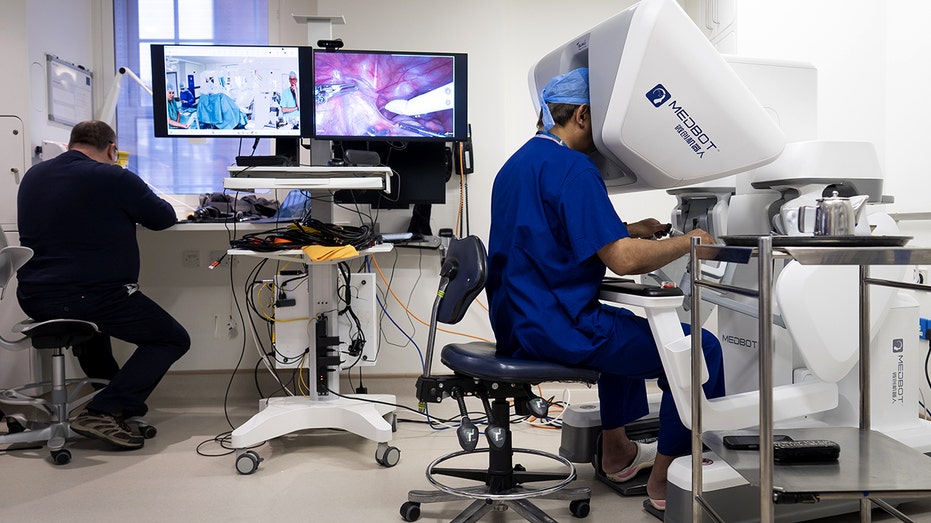
A significant medical milestone was achieved when surgeons at The London Clinic successfully conducted a remote robotic surgery to remove prostate cancer from a patient located nearly 1,500 miles away in Gibraltar. This pioneering operation, which took place on March 4, 2026, is the first instance of a U.K. hospital performing robot-assisted telesurgery on a patient located at such a distance.
The groundbreaking procedure involved a collaboration between two hospitals: The London Clinic and St Bernard’s Hospital in Gibraltar. The patient, Paul Buxton, a 62-year-old resident of Gibraltar, was positioned in the operating room while Professor Prokar Dasgupta, the lead surgeon, controlled the surgical robot from a console at The London Clinic’s robotic center on Harley Street.
How the Remote Robotic Surgery Functioned
The operation utilized the Toumai Robotic System, developed by MicroPort MedBot, which is designed for high-precision and minimally invasive surgeries. The system comprised four robotic surgical arms, a high-definition 3D camera, and specialized surgical tools. A secure fiber optic network facilitated the transmission of the surgeon’s movements to the robotic system in Gibraltar, with a delay of approximately 48 milliseconds, enabling near real-time operation.
Local urological surgeons James Allen and Paul Hughes were on standby in Gibraltar, prepared to intervene in case of any technical issues or complications. Fortunately, the operation went smoothly, and Buxton experienced a swift recovery, feeling “fantastic” just days after the procedure.
Significance of the Surgery for the Future of Medicine
The successful execution of this remote robotic surgery reflects decades of advancements in telesurgery, a field that has evolved significantly since its inception. One of the earliest examples of remote surgery occurred during the Lindbergh Operation, where surgeons in New York performed a gallbladder removal on a patient in France. Recent advances have allowed for cross-continental surgeries, such as those conducted between Rome and Beijing, as well as long-distance prostate surgeries in various regions of Africa.
This latest operation at The London Clinic represents a pivotal shift in the application of remote robotic surgery, moving from experimental phases towards practical medical use. The hospitals plan to showcase this technology further by live-streaming a telesurgery procedure to thousands of surgeons at the upcoming European Association of Urology Congress.
Technological Innovations Enabling Telesurgery
Key technologies are crucial to making remote surgeries feasible. Ultra-low latency networks are essential, as surgeons must react instantaneously during operations. Modern fiber optic networks and backup 5G connections help maintain minimal delays.
Additionally, high-precision surgical robots translate a surgeon’s hand movements into smaller, more stable movements inside the patient’s body, often improving outcomes in delicate procedures. Advanced imaging systems, such as high-definition 3D cameras, provide surgeons with a clearer view than traditional open surgery.
Despite these advancements, challenges remain. Reliable infrastructure is vital, as hospitals must ensure their networks have minimal downtime. The high cost of robotic surgical systems and specialized networks can also be a barrier. Regulatory issues arise as well, particularly concerning cross-border operations and licensing requirements. Moreover, every remote procedure necessitates a local surgical team ready to assist if technology fails.
Implications for Patients and Healthcare Access
The implications of this surgery extend far beyond the operating room. Patients may soon no longer need to travel to major medical centers for specialized procedures. Instead, specialists could remotely operate while patients remain in hospitals closer to their homes. This development could greatly benefit individuals in rural areas or regions with limited access to healthcare specialists, potentially reducing wait times for procedures.
The focus on safety remains paramount. Hospitals must demonstrate that remote procedures are as reliable as traditional surgeries before widespread adoption occurs.
As technology continues to evolve, the prospect of remote robotic surgery transitioning from a futuristic concept to a standard practice in healthcare becomes increasingly plausible. The successful operation connecting London and Gibraltar signals a promising direction for the future of surgical care, where geographical barriers may no longer dictate access to world-class medical treatment.

Philadelphia Parks Launch Free Earth Month Events Starting April 1

Bradford’s Fish Fry Fridays Serve Community with Delicious Dinners

Trump Faces Growing Challenges Amid Rising Tensions with Iran

Scientists Probe the Universe’s Missing Topological Defects

Samsung Galaxy Watch 9 to Feature Larger 435mAh Battery

UConn Huskies Aim to Defend Title in 2026 NCAA Women’s Tournament

U.S. Littoral Combat Ships Dock in Malaysia Amid Regional Tensions

Healthy Choice Wellness Reports Quarterly Earnings, Shares Rise

Urgent News: Charles M. Payment Passes Away at 78 in Duluth

University of Hawaiʻi Joins $25.6M AI Project to Enhance Disaster Monitoring

Major Grant Enhances Cancer Care and Research in Hawaiʻi

Joleen Chaney, Beloved Journalist, Passes Leaving Lasting Legacy

San Francisco’s SFO to Welcome 16 Airlines with Nonstop Flights to Europe in 2026

Goldman Sachs Unveils 2026 Catalyst Playbook for Biotech Investors

Discover Top Business Smartphones for Professionals in 2026

Urgent Update: Tom Aspinall’s Vision Deteriorates After UFC 321

Texas Roadhouse Honors Veterans with Free Meal Vouchers

CD Projekt Red Confirms No Release for The Witcher 4 in 2026
-
Science9 months ago
University of Hawaiʻi Joins $25.6M AI Project to Enhance Disaster Monitoring
-
 Health8 months ago
Major Grant Enhances Cancer Care and Research in Hawaiʻi
-
 Top Stories9 months ago
Joleen Chaney, Beloved Journalist, Passes Leaving Lasting Legacy
-
 World7 months ago
San Francisco’s SFO to Welcome 16 Airlines with Nonstop Flights to Europe in 2026
-
 Business8 months ago
Goldman Sachs Unveils 2026 Catalyst Playbook for Biotech Investors
-
 Business7 months ago
Discover Top Business Smartphones for Professionals in 2026
-
 Top Stories9 months ago
Urgent Update: Tom Aspinall’s Vision Deteriorates After UFC 321
-
 Lifestyle9 months ago
Texas Roadhouse Honors Veterans with Free Meal Vouchers
-
 Entertainment8 months ago
CD Projekt Red Confirms No Release for The Witcher 4 in 2026
-

 Top Stories10 months ago
AI Disruption: AWS Faces Threat as Startups Shift Cloud Focus
-

 Health10 months ago
MIT Scientists Uncover Surprising Genomic Loops During Cell Division
-

 Entertainment10 months ago
Discover the Full Map of Pokémon Legends: Z-A’s Lumiose City