
Lifestyle
Glasgow’s Lion Chambers Faces Decline as Restoration Efforts Stalled

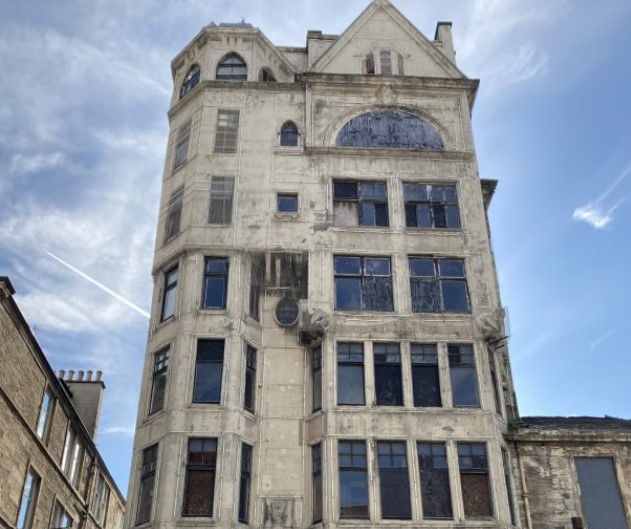
The iconic Lion Chambers, located at 172 Hope Street in Glasgow, is witnessing a significant decline as restoration efforts remain stalled. Commissioned by lawyer William George Black and completed in 1907, the building was designed by architect James Salmon Jnr and initially served as a unique blend of legal offices and art studio space. Its innovative use of large windows and early reinforced concrete construction marked it as a notable example of the Glasgow Style and Art Nouveau architecture.
Despite being designated a Category A listed building in 1966, which affords it the highest level of protection in Scotland, Lion Chambers has faced ongoing challenges. By the 1990s, its structural integrity had deteriorated, raising alarms over public safety and prompting a series of interventions. A dangerous buildings order was issued in 1995, leading to the clearance of upper floors and the implementation of protective measures to prevent falling debris.
Efforts to restore the building have been hampered by financial constraints and a complex ownership structure. According to Scott Abercrombie, Associate Director at John Gilbert Architects, who visited Lion Chambers in 2019, addressing the structural issues is feasible but requires significant investment. He noted that there is a “pretty significant conservation deficit,” indicating that the required funds substantially outweigh the property’s end value.
The plight of Lion Chambers illustrates broader concerns regarding Glasgow’s architectural heritage. The building, once bustling with lawyers and artists, now stands empty, with graffiti marking its exterior and pigeons nesting within. The loss of lead from its roof and missing windows have compounded its decay, raising questions about the future of such an important cultural landmark.
Attempts to explore viable funding and restoration plans continue, with various proposals considered over the years. Lion Chambers remains a priority case on at-risk registers, reflecting the ongoing struggle to reconcile its engineering demands with a sustainable new use. Recent discussions have also centered around mechanisms aimed at addressing long-term vacant properties, suggesting that there may be a path forward.
As Glasgow grapples with its architectural identity, the fate of Lion Chambers poses critical questions about the preservation of its historical structures. The choice to restore or abandon such sites carries significant implications, not only for the city’s landscape but also for its cultural legacy. As Abercrombie aptly stated, “Cash is king,” highlighting the financial realities that underpin efforts to breathe new life into historical buildings.
The challenge ahead is clear: Glasgow must decide whether to invest in restoring its architectural treasures like Lion Chambers or risk watching them fade into obscurity. The clock is ticking, and the price tag for preservation will only grow with time.

Philadelphia Parks Launch Free Earth Month Events Starting April 1

Bradford’s Fish Fry Fridays Serve Community with Delicious Dinners

Trump Faces Growing Challenges Amid Rising Tensions with Iran

Scientists Probe the Universe’s Missing Topological Defects

Samsung Galaxy Watch 9 to Feature Larger 435mAh Battery

UConn Huskies Aim to Defend Title in 2026 NCAA Women’s Tournament

U.S. Littoral Combat Ships Dock in Malaysia Amid Regional Tensions

Healthy Choice Wellness Reports Quarterly Earnings, Shares Rise

Urgent News: Charles M. Payment Passes Away at 78 in Duluth

University of Hawaiʻi Joins $25.6M AI Project to Enhance Disaster Monitoring

Major Grant Enhances Cancer Care and Research in Hawaiʻi

Joleen Chaney, Beloved Journalist, Passes Leaving Lasting Legacy

San Francisco’s SFO to Welcome 16 Airlines with Nonstop Flights to Europe in 2026

Goldman Sachs Unveils 2026 Catalyst Playbook for Biotech Investors

Discover Top Business Smartphones for Professionals in 2026

Urgent Update: Tom Aspinall’s Vision Deteriorates After UFC 321

Texas Roadhouse Honors Veterans with Free Meal Vouchers

CD Projekt Red Confirms No Release for The Witcher 4 in 2026
-
Science9 months ago
University of Hawaiʻi Joins $25.6M AI Project to Enhance Disaster Monitoring
-
 Health8 months ago
Major Grant Enhances Cancer Care and Research in Hawaiʻi
-
 Top Stories9 months ago
Joleen Chaney, Beloved Journalist, Passes Leaving Lasting Legacy
-
 World7 months ago
San Francisco’s SFO to Welcome 16 Airlines with Nonstop Flights to Europe in 2026
-
 Business8 months ago
Goldman Sachs Unveils 2026 Catalyst Playbook for Biotech Investors
-
 Business8 months ago
Discover Top Business Smartphones for Professionals in 2026
-
 Top Stories9 months ago
Urgent Update: Tom Aspinall’s Vision Deteriorates After UFC 321
-
 Lifestyle9 months ago
Texas Roadhouse Honors Veterans with Free Meal Vouchers
-
 Entertainment8 months ago
CD Projekt Red Confirms No Release for The Witcher 4 in 2026
-

 Top Stories10 months ago
AI Disruption: AWS Faces Threat as Startups Shift Cloud Focus
-

 Health10 months ago
MIT Scientists Uncover Surprising Genomic Loops During Cell Division
-

 Entertainment10 months ago
Discover the Full Map of Pokémon Legends: Z-A’s Lumiose City