
Science
Childhood Obesity Linked to Economic Mobility Challenges in U.S.

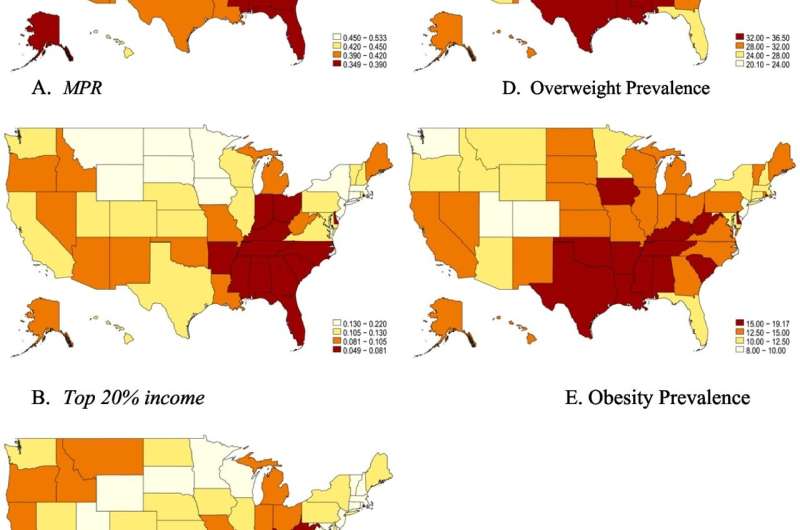
New research from Ball State University highlights a troubling connection between childhood obesity and economic mobility in the United States. Co-authored by economist Dr. Maoyong Fan, the study reveals that childhood obesity not only affects health but also significantly impairs future economic opportunities, limiting individuals’ prospects of upward mobility.
The study, titled “Weighing Down the Future: Long-term Effects of Childhood Obesity on Intergenerational Mobility,” will be published in the Journal of Population Economics. It draws on data from the National Longitudinal Study of Adolescent to Adult Health (Add Health), which tracked participants from their teenage years into adulthood. By linking this data with the Opportunity Atlas, the researchers uncovered a stark correlation between adolescent weight and future economic status.
Findings indicate that adolescents classified as obese tend to have adult incomes that rank about 20 percentile points lower than those of their peers with normal weight. Additionally, childhood obesity is associated with a 17.6 percentage-point decrease in the likelihood of living in low-poverty neighborhoods during adulthood.
Dr. Fan, a professor in Ball State’s Miller College of Business, emphasized the broader implications of these findings, stating, “Childhood obesity isn’t just a health crisis. It is an economic mobility crisis.” The research points to a range of adverse outcomes, including lower educational attainment and persistent health issues, along with discrimination in the labor market.
The study also highlights that these economic penalties disproportionately affect certain groups. Gender disparities show that females face larger mobility penalties than males. The impact is further magnified for children from low-income families, particularly in regions identified as both “obesity hotspots” and “opportunity deserts,” such as the South and Midwest.
According to co-author Dr. Yanhong Jin from Rutgers University, “For millions of American families, excess weight in childhood may be quietly closing doors to opportunity.” This creates a feedback loop that can deepen existing inequalities.
As policymakers explore strategies to combat childhood obesity, the research advocates for a dual approach. Prevention should not only address health concerns but also be viewed as an investment in future economic opportunities. Dr. Man Zhang, an assistant professor at Renmin University in China, noted that interventions aimed at reducing childhood obesity could yield benefits beyond healthcare savings, supporting higher educational outcomes and improved job prospects.
This study underscores the necessity of addressing childhood obesity as a multifaceted issue, impacting not just health but also economic potential and social equity. The implications of these findings may shape future policies aimed at enhancing the well-being of children and their families across the United States.

Philadelphia Parks Launch Free Earth Month Events Starting April 1

Bradford’s Fish Fry Fridays Serve Community with Delicious Dinners

Trump Faces Growing Challenges Amid Rising Tensions with Iran

Scientists Probe the Universe’s Missing Topological Defects

Samsung Galaxy Watch 9 to Feature Larger 435mAh Battery

UConn Huskies Aim to Defend Title in 2026 NCAA Women’s Tournament

U.S. Littoral Combat Ships Dock in Malaysia Amid Regional Tensions

Healthy Choice Wellness Reports Quarterly Earnings, Shares Rise

Urgent News: Charles M. Payment Passes Away at 78 in Duluth

University of Hawaiʻi Joins $25.6M AI Project to Enhance Disaster Monitoring

Major Grant Enhances Cancer Care and Research in Hawaiʻi

Joleen Chaney, Beloved Journalist, Passes Leaving Lasting Legacy

San Francisco’s SFO to Welcome 16 Airlines with Nonstop Flights to Europe in 2026

Goldman Sachs Unveils 2026 Catalyst Playbook for Biotech Investors

Discover Top Business Smartphones for Professionals in 2026

Urgent Update: Tom Aspinall’s Vision Deteriorates After UFC 321

Texas Roadhouse Honors Veterans with Free Meal Vouchers

CD Projekt Red Confirms No Release for The Witcher 4 in 2026
-
Science9 months ago
University of Hawaiʻi Joins $25.6M AI Project to Enhance Disaster Monitoring
-
 Health8 months ago
Major Grant Enhances Cancer Care and Research in Hawaiʻi
-
 Top Stories9 months ago
Joleen Chaney, Beloved Journalist, Passes Leaving Lasting Legacy
-
 World7 months ago
San Francisco’s SFO to Welcome 16 Airlines with Nonstop Flights to Europe in 2026
-
 Business8 months ago
Goldman Sachs Unveils 2026 Catalyst Playbook for Biotech Investors
-
 Business7 months ago
Discover Top Business Smartphones for Professionals in 2026
-
 Top Stories9 months ago
Urgent Update: Tom Aspinall’s Vision Deteriorates After UFC 321
-
 Lifestyle9 months ago
Texas Roadhouse Honors Veterans with Free Meal Vouchers
-
 Entertainment8 months ago
CD Projekt Red Confirms No Release for The Witcher 4 in 2026
-

 Top Stories10 months ago
AI Disruption: AWS Faces Threat as Startups Shift Cloud Focus
-

 Health10 months ago
MIT Scientists Uncover Surprising Genomic Loops During Cell Division
-

 Entertainment10 months ago
Discover the Full Map of Pokémon Legends: Z-A’s Lumiose City