
Science
New Leaf-Scanning Technology Helps Farmers Assess Fruit Ripeness

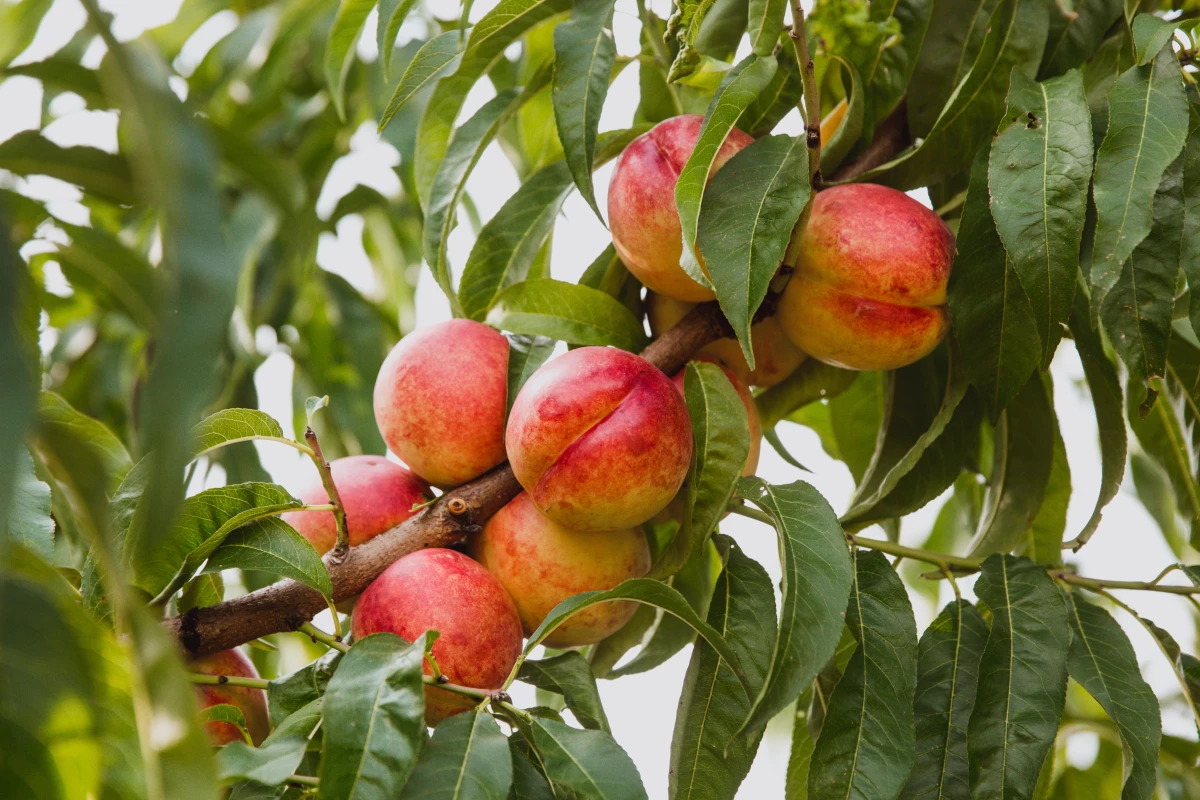
Farmers may soon have a revolutionary tool at their disposal for determining the ripeness of fruit without damaging their crops, thanks to innovative research from scientists at Universitat Rovira i Virgili in Spain. This new technique allows for the analysis of leaves adjacent to fruit, preserving the integrity of the fruit and potentially enhancing yields.
Researchers tested this method over an 11-week period on a commercial orchard containing 12 nectarine trees. The process employs two spectrometers to conduct near-infrared and mid-infrared scans on both the top surfaces and undersides of the leaves. By examining how the leaves absorb or reflect light emitted by the spectrometers, scientists can accurately gauge the ripeness of the fruit.
Dr. Daniel Schorn, a member of the research team, explained the connection between the leaves and the fruit: “The leaves undergo physiological and biochemical changes as the fruit ripens, due to the direct connection between the metabolism of the leaves and that of the fruit. These changes are reflected in their spectral fingerprint.” This spectral analysis has proven particularly effective in indicating fruit weight and firmness.
While this new technique excels in measuring certain ripeness indicators, such as weight and firmness, it is less accurate for other properties like sugar content, pH, and acidity. However, further development of the technology may enhance these capabilities in the future.
Traditionally, farmers have relied on picking fruit samples to assess ripeness, a method that can reduce overall yields due to the damage inflicted on the fruit. In contrast, the leaf-scanning technique promises a non-invasive approach that minimizes this loss. Current methods of direct scanning of fruit using spectrometers often leave marks, negatively impacting the market value of the fruit.
Looking ahead, researchers envision a future where portable scanners enable farmers to assess entire crops by sampling representative fruit. This advancement could allow for selective harvesting, ensuring that only ripe fruits are picked while leaving the remaining fruit on the tree to mature.
The findings of this study were detailed in a paper recently published in the journal ACS Agricultural Science & Technology. As the agricultural sector continues to seek innovative solutions to enhance productivity, this leaf-scanning technology may represent a significant step forward in sustainable farming practices.

Philadelphia Parks Launch Free Earth Month Events Starting April 1

Bradford’s Fish Fry Fridays Serve Community with Delicious Dinners

Trump Faces Growing Challenges Amid Rising Tensions with Iran

Scientists Probe the Universe’s Missing Topological Defects

Samsung Galaxy Watch 9 to Feature Larger 435mAh Battery

UConn Huskies Aim to Defend Title in 2026 NCAA Women’s Tournament

U.S. Littoral Combat Ships Dock in Malaysia Amid Regional Tensions

Healthy Choice Wellness Reports Quarterly Earnings, Shares Rise

Urgent News: Charles M. Payment Passes Away at 78 in Duluth

University of Hawaiʻi Joins $25.6M AI Project to Enhance Disaster Monitoring

Major Grant Enhances Cancer Care and Research in Hawaiʻi

Joleen Chaney, Beloved Journalist, Passes Leaving Lasting Legacy

San Francisco’s SFO to Welcome 16 Airlines with Nonstop Flights to Europe in 2026

Goldman Sachs Unveils 2026 Catalyst Playbook for Biotech Investors

Discover Top Business Smartphones for Professionals in 2026

Urgent Update: Tom Aspinall’s Vision Deteriorates After UFC 321

Texas Roadhouse Honors Veterans with Free Meal Vouchers

CD Projekt Red Confirms No Release for The Witcher 4 in 2026
-
Science9 months ago
University of Hawaiʻi Joins $25.6M AI Project to Enhance Disaster Monitoring
-
 Health8 months ago
Major Grant Enhances Cancer Care and Research in Hawaiʻi
-
 Top Stories9 months ago
Joleen Chaney, Beloved Journalist, Passes Leaving Lasting Legacy
-
 World7 months ago
San Francisco’s SFO to Welcome 16 Airlines with Nonstop Flights to Europe in 2026
-
 Business8 months ago
Goldman Sachs Unveils 2026 Catalyst Playbook for Biotech Investors
-
 Business8 months ago
Discover Top Business Smartphones for Professionals in 2026
-
 Top Stories9 months ago
Urgent Update: Tom Aspinall’s Vision Deteriorates After UFC 321
-
 Lifestyle9 months ago
Texas Roadhouse Honors Veterans with Free Meal Vouchers
-
 Entertainment8 months ago
CD Projekt Red Confirms No Release for The Witcher 4 in 2026
-

 Top Stories10 months ago
AI Disruption: AWS Faces Threat as Startups Shift Cloud Focus
-

 Health10 months ago
MIT Scientists Uncover Surprising Genomic Loops During Cell Division
-

 Entertainment10 months ago
Discover the Full Map of Pokémon Legends: Z-A’s Lumiose City