
Science
New Study Highlights Urgent Risks of Kessler Syndrome for Space Travel

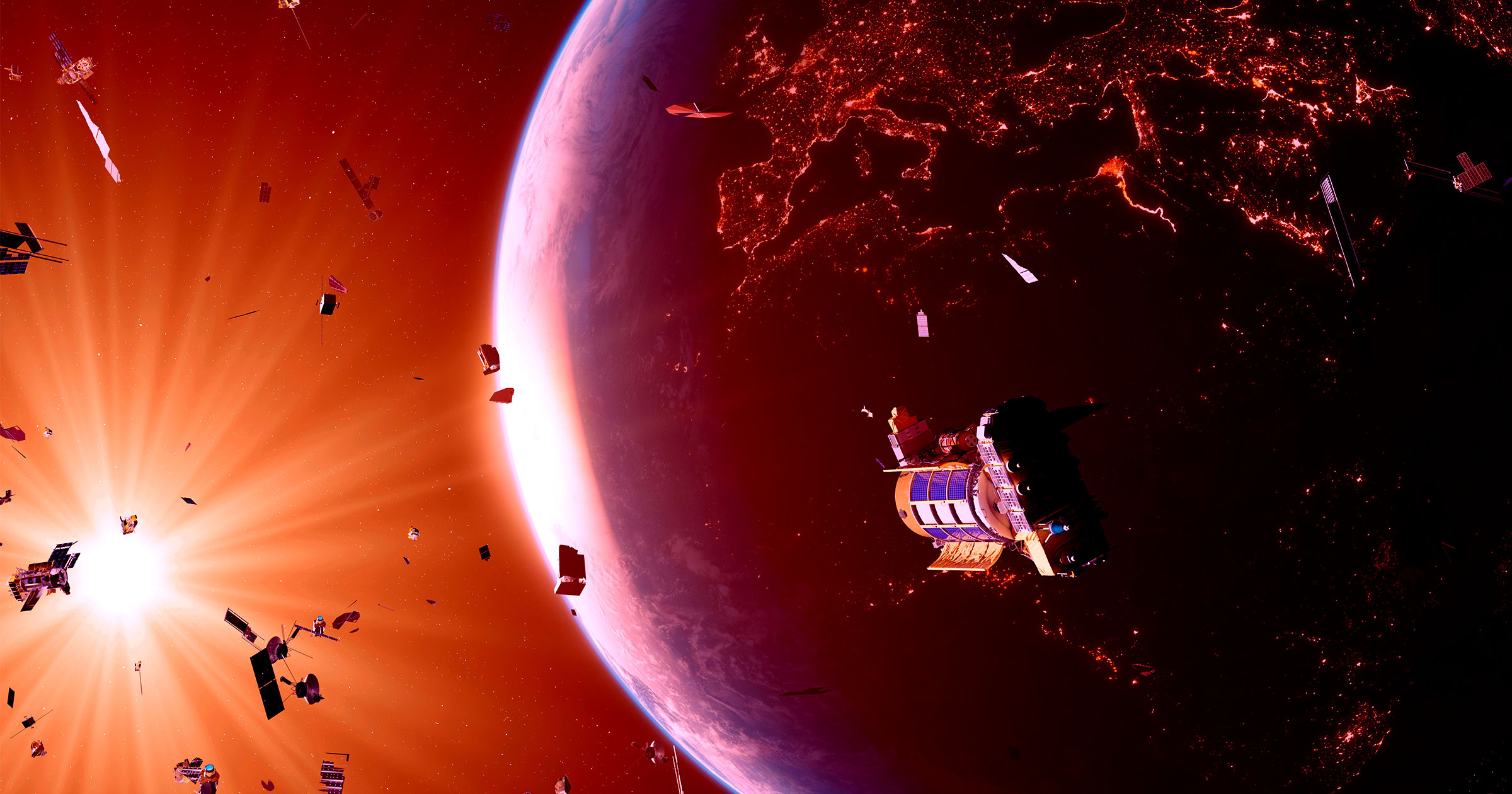
In a critical study, researchers from Princeton University, the University of British Columbia, and the University of Regina have quantified the risks associated with Kessler Syndrome, a phenomenon that threatens the safety of space travel. They introduced a new metric, the “Collision Realization and Significant Harm (CRASH) Clock,” which measures the time it could take for catastrophic collisions in orbit to occur under specific conditions.
The term Kessler Syndrome, named after NASA researcher Donald Kessler, refers to a cascading series of collisions between satellites that could create a debris belt around Earth. In 1978, Kessler and his colleagues warned that a single impact could escalate into further accidents, significantly complicating future space exploration. The latest findings raise alarms about the surging number of satellites in orbit, particularly from large constellations like those developed by companies such as SpaceX.
The study highlights that without proper collision avoidance measures, a major disruptive event, such as a powerful solar storm, could lead to a collision in as little as 2.8 days. This stark warning follows a solar storm in May 2024, which caused numerous satellites to adjust their orbits, resulting in increased uncertainty for collision avoidance maneuvers.
Growing Risks from Satellite Constellations
The number of satellites in low-Earth orbit has surged dramatically in recent years, with the total nearly doubling from 13,700 in 2019 to over 24,000 expected by 2025. A significant contributor to this rise is SpaceX, which recently celebrated the launch of its 10,000th Starlink satellite. As of October 30, 2023, SpaceX operates approximately 9,000 functioning satellites, comprising over 60% of all active satellites currently in orbit.
While these satellites are designed to disintegrate upon reentry, the sheer volume of active objects raises concerns about potential collisions. Recently, SpaceX reported losing contact with one of its Starlink satellites, underscoring the dangers of operating such vast networks in space. The company confirmed that the satellite is tumbling and will reenter the Earth’s atmosphere in the coming weeks, posing no immediate threat to the International Space Station or its crew.
As companies like Amazon and the state-backed China Aerospace Science and Industry Corporation plan their own satellite constellations, the number of objects in orbit is projected to rise even further. This exponential growth not only increases the likelihood of disastrous collisions but also poses challenges to astronomical observations. Experts have raised concerns that the satellites could release harmful pollutants during reentry, contributing to atmospheric degradation.
The Need for Improved Oversight
The researchers emphasized the urgent need for better methods to manage and quantify the stress on the orbital environment. Their findings indicate that while collisional cascades may develop over decades, even a single collision could cause immediate and significant degradation of the orbital ecosystem. They likened such an event to the Exxon Valdez oil spill, where operations could continue post-collision but under much more hazardous conditions.
In light of these findings, the scientific community is calling for increased oversight and tighter regulations regarding satellite launches and operations. The rise in satellite deployments presents a critical challenge that requires immediate attention to prevent potential disasters in space.
This latest study serves as a stark reminder of the precarious balance we must maintain in our pursuit of advancements in space technology. As the number of satellites continues to grow, the risks associated with Kessler Syndrome demand serious consideration and proactive management to ensure the safety of future space endeavors.

Philadelphia Parks Launch Free Earth Month Events Starting April 1

Bradford’s Fish Fry Fridays Serve Community with Delicious Dinners

Trump Faces Growing Challenges Amid Rising Tensions with Iran

Scientists Probe the Universe’s Missing Topological Defects

Samsung Galaxy Watch 9 to Feature Larger 435mAh Battery

UConn Huskies Aim to Defend Title in 2026 NCAA Women’s Tournament

U.S. Littoral Combat Ships Dock in Malaysia Amid Regional Tensions

Healthy Choice Wellness Reports Quarterly Earnings, Shares Rise

Urgent News: Charles M. Payment Passes Away at 78 in Duluth

University of Hawaiʻi Joins $25.6M AI Project to Enhance Disaster Monitoring

Major Grant Enhances Cancer Care and Research in Hawaiʻi

Joleen Chaney, Beloved Journalist, Passes Leaving Lasting Legacy

San Francisco’s SFO to Welcome 16 Airlines with Nonstop Flights to Europe in 2026

Goldman Sachs Unveils 2026 Catalyst Playbook for Biotech Investors

Discover Top Business Smartphones for Professionals in 2026

Urgent Update: Tom Aspinall’s Vision Deteriorates After UFC 321

Texas Roadhouse Honors Veterans with Free Meal Vouchers

CD Projekt Red Confirms No Release for The Witcher 4 in 2026
-
Science9 months ago
University of Hawaiʻi Joins $25.6M AI Project to Enhance Disaster Monitoring
-
 Health8 months ago
Major Grant Enhances Cancer Care and Research in Hawaiʻi
-
 Top Stories9 months ago
Joleen Chaney, Beloved Journalist, Passes Leaving Lasting Legacy
-
 World7 months ago
San Francisco’s SFO to Welcome 16 Airlines with Nonstop Flights to Europe in 2026
-
 Business8 months ago
Goldman Sachs Unveils 2026 Catalyst Playbook for Biotech Investors
-
 Business8 months ago
Discover Top Business Smartphones for Professionals in 2026
-
 Top Stories9 months ago
Urgent Update: Tom Aspinall’s Vision Deteriorates After UFC 321
-
 Lifestyle9 months ago
Texas Roadhouse Honors Veterans with Free Meal Vouchers
-
 Entertainment8 months ago
CD Projekt Red Confirms No Release for The Witcher 4 in 2026
-

 Top Stories10 months ago
AI Disruption: AWS Faces Threat as Startups Shift Cloud Focus
-

 Health10 months ago
MIT Scientists Uncover Surprising Genomic Loops During Cell Division
-

 Entertainment10 months ago
Discover the Full Map of Pokémon Legends: Z-A’s Lumiose City