
Science
Alaska’s Rivers Turn Orange as Thawing Permafrost Unleashes Rust

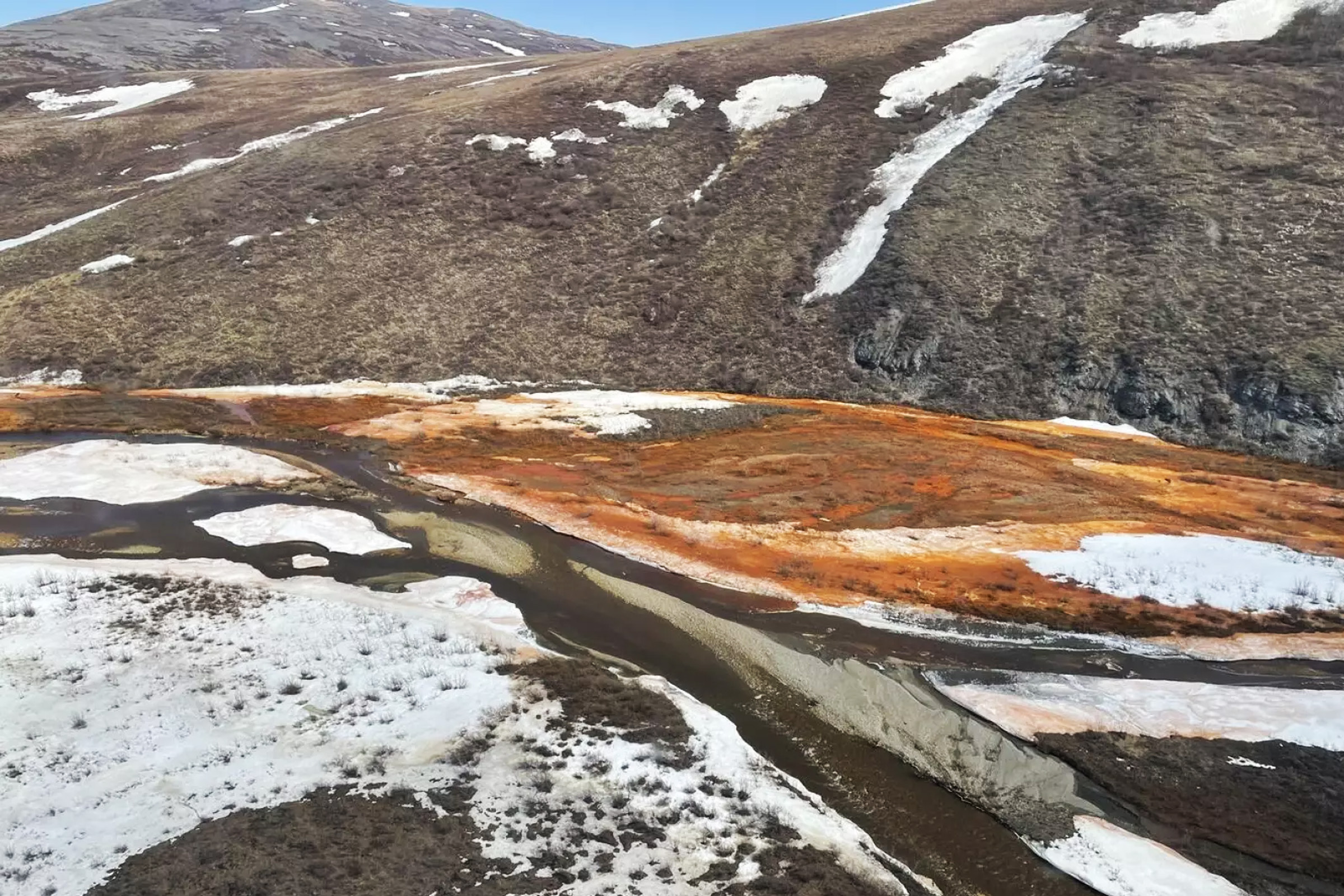
Bright orange rivers have emerged across Alaska, alarming residents and scientists alike. This striking change is not due to pollution but rather a natural phenomenon linked to climate change. According to the National Oceanic and Atmospheric Administration (NOAA), the vibrant coloration results from rust released as the permafrost thaws, a process accelerated by rising greenhouse gas emissions.
Research from NOAA highlights that the thawing ground is allowing iron in the soil to oxidize when exposed to air and water, leading to the discoloration of waterways. This unsettling transformation signals that the Arctic is warming at a rate much faster than the global average, with significant implications for local ecosystems and climate patterns worldwide.
Environmental Impact and Monitoring Efforts
The annual report from NOAA indicates that the Arctic’s warming is reshaping landscapes and affecting the livelihoods of Arctic communities. Matthew Druckenmiller, the lead author of the report and senior scientist at the National Snow and Ice Data Center in Boulder, Colorado, emphasized the broader consequences of Arctic warming. “When the Arctic thaws and warms, it’s having an impact on the global climate,” he explained.
Since 2018, observations from local residents, including pilots and park visitors, have noted the orange tint in rivers and streams. Josh Koch, a research hydrologist with the US Geological Survey, stated that the phenomenon is widespread, affecting hundreds of miles of terrain across the state. The contamination is primarily visible in streams, where the iron precipitates and creates noticeable staining.
While the immediate health effects on residents remain uncertain, the situation is under close observation by scientists. Increased acidity levels in the water, attributed to the iron, may pose risks to local fish populations, particularly the Dolly Varden char. The juvenile offspring of this species have seen a dramatic decline, likely linked to changes in their aquatic habitat.
Broader Climate Concerns
The bright orange rivers serve as a stark reminder of the ongoing climate crisis. The melting of permafrost not only impacts local ecosystems but also contributes to rising sea levels and altered weather patterns, as noted in the NOAA report. As the Arctic continues to warm, the ramifications extend beyond the region, affecting global climate systems and economic conditions.
“The food chain is connected to the lives of people living in the Arctic,” Druckenmiller stated, underscoring the intertwined nature of environmental health and human well-being in these communities.
As scientists continue to monitor the changing landscape, the alarming transformation of Alaska’s rivers highlights the urgent need for action against climate change. The vibrant orange waterways serve as both a warning and a call for increased awareness and intervention to protect the fragile ecosystems of the Arctic.

Philadelphia Parks Launch Free Earth Month Events Starting April 1

Bradford’s Fish Fry Fridays Serve Community with Delicious Dinners

Trump Faces Growing Challenges Amid Rising Tensions with Iran

Scientists Probe the Universe’s Missing Topological Defects

Samsung Galaxy Watch 9 to Feature Larger 435mAh Battery

UConn Huskies Aim to Defend Title in 2026 NCAA Women’s Tournament

U.S. Littoral Combat Ships Dock in Malaysia Amid Regional Tensions

Healthy Choice Wellness Reports Quarterly Earnings, Shares Rise

Urgent News: Charles M. Payment Passes Away at 78 in Duluth

University of Hawaiʻi Joins $25.6M AI Project to Enhance Disaster Monitoring

Major Grant Enhances Cancer Care and Research in Hawaiʻi

Joleen Chaney, Beloved Journalist, Passes Leaving Lasting Legacy

San Francisco’s SFO to Welcome 16 Airlines with Nonstop Flights to Europe in 2026

Goldman Sachs Unveils 2026 Catalyst Playbook for Biotech Investors

Discover Top Business Smartphones for Professionals in 2026

Urgent Update: Tom Aspinall’s Vision Deteriorates After UFC 321

Texas Roadhouse Honors Veterans with Free Meal Vouchers

CD Projekt Red Confirms No Release for The Witcher 4 in 2026
-
Science9 months ago
University of Hawaiʻi Joins $25.6M AI Project to Enhance Disaster Monitoring
-
 Health8 months ago
Major Grant Enhances Cancer Care and Research in Hawaiʻi
-
 Top Stories9 months ago
Joleen Chaney, Beloved Journalist, Passes Leaving Lasting Legacy
-
 World7 months ago
San Francisco’s SFO to Welcome 16 Airlines with Nonstop Flights to Europe in 2026
-
 Business8 months ago
Goldman Sachs Unveils 2026 Catalyst Playbook for Biotech Investors
-
 Business8 months ago
Discover Top Business Smartphones for Professionals in 2026
-
 Top Stories9 months ago
Urgent Update: Tom Aspinall’s Vision Deteriorates After UFC 321
-
 Lifestyle9 months ago
Texas Roadhouse Honors Veterans with Free Meal Vouchers
-
 Entertainment8 months ago
CD Projekt Red Confirms No Release for The Witcher 4 in 2026
-

 Top Stories10 months ago
AI Disruption: AWS Faces Threat as Startups Shift Cloud Focus
-

 Health10 months ago
MIT Scientists Uncover Surprising Genomic Loops During Cell Division
-

 Entertainment10 months ago
Discover the Full Map of Pokémon Legends: Z-A’s Lumiose City