
Science
Researchers Uncover Key Protein in Tadpole Tail Regeneration

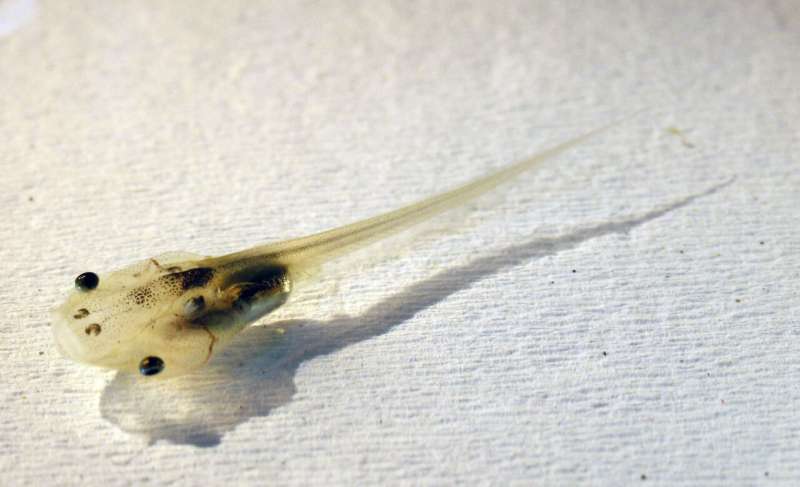
Researchers from the University of Tokyo have made significant strides in understanding how tadpoles regenerate their tails. Their study reveals that the protein c1qtnf3, secreted by muscle stem cells, plays a crucial role in directing macrophages from immune responses to regenerative functions. This discovery offers new insights into the regenerative abilities of certain species and opens avenues for future applications in mammals. The findings were published in the Proceedings of the National Academy of Sciences on November 17, 2025.
Understanding Tadpole Regeneration
Tadpoles of the African clawed frog, Xenopus laevis, possess remarkable regenerative capabilities, allowing them to regrow fully functional tails, including spinal cord and muscle. This complex process relies heavily on the activation of stem cells. However, studying these early regenerative stages has posed challenges due to the limited number of stem cells present.
Taro Fukazawa, one of the leading researchers, noted the difficulty in observing these cells, stating, “We have previously established a method for efficiently enriching tissue stem cells. Building on this technique, we planned to clarify the behavior of tissue stem cells during tail regeneration by examining genes specifically expressed in the tissue stem cells.” This led to the use of single-cell RNA sequencing to identify active genes in individual cells.
Through this advanced technique, the team identified various cell types and focused their attention on putative muscle stem cells. They discovered that these cells exhibited a higher expression of c1qtnf3 compared to other cell types. To delve deeper into the role of this gene in regeneration, the researchers performed “knockdown” experiments that blocked its expression.
The Role of Macrophages in Regeneration
The results were illuminating. The knockdown of c1qtnf3 led to impaired tail regeneration, indicating its essential function in the process. Moreover, the researchers observed a significant reduction in the number of macrophages present at the tail stump of the knocked-down tadpoles, suggesting that macrophage activity might be compromised.
This observation prompted the hypothesis that macrophages, which are known for their immune functions, could be redirected towards aiding regeneration through the influence of muscle stem cells and c1qtnf3. To test this theory, the researchers activated macrophages using another gene, neutrophil cytosolic factor 1, which is involved in macrophage function.
Kato expressed excitement at the findings, stating, “When I found that forced expression of the gene, and consequently rising macrophage numbers, rescued tail regeneration in tadpoles, it felt like the dots connected.” The proposed mechanism involves putative muscle stem cells secreting c1qtnf3, which leads to an accumulation of macrophages at the tail stump, thereby promoting regeneration.
Looking ahead, the team aims to further explore how macrophages facilitate regeneration under the influence of c1qtnf3 and to uncover the precise cellular and molecular mechanisms involved in regenerating tissues. This research not only enhances our understanding of biological regeneration but also holds potential implications for regenerative medicine in humans.

Philadelphia Parks Launch Free Earth Month Events Starting April 1

Bradford’s Fish Fry Fridays Serve Community with Delicious Dinners

Trump Faces Growing Challenges Amid Rising Tensions with Iran

Scientists Probe the Universe’s Missing Topological Defects

Samsung Galaxy Watch 9 to Feature Larger 435mAh Battery

UConn Huskies Aim to Defend Title in 2026 NCAA Women’s Tournament

U.S. Littoral Combat Ships Dock in Malaysia Amid Regional Tensions

Healthy Choice Wellness Reports Quarterly Earnings, Shares Rise

Urgent News: Charles M. Payment Passes Away at 78 in Duluth

University of Hawaiʻi Joins $25.6M AI Project to Enhance Disaster Monitoring

Major Grant Enhances Cancer Care and Research in Hawaiʻi

Joleen Chaney, Beloved Journalist, Passes Leaving Lasting Legacy

San Francisco’s SFO to Welcome 16 Airlines with Nonstop Flights to Europe in 2026

Goldman Sachs Unveils 2026 Catalyst Playbook for Biotech Investors

Discover Top Business Smartphones for Professionals in 2026

Urgent Update: Tom Aspinall’s Vision Deteriorates After UFC 321

Texas Roadhouse Honors Veterans with Free Meal Vouchers

CD Projekt Red Confirms No Release for The Witcher 4 in 2026
-
Science9 months ago
University of Hawaiʻi Joins $25.6M AI Project to Enhance Disaster Monitoring
-
 Health8 months ago
Major Grant Enhances Cancer Care and Research in Hawaiʻi
-
 Top Stories9 months ago
Joleen Chaney, Beloved Journalist, Passes Leaving Lasting Legacy
-
 World7 months ago
San Francisco’s SFO to Welcome 16 Airlines with Nonstop Flights to Europe in 2026
-
 Business8 months ago
Goldman Sachs Unveils 2026 Catalyst Playbook for Biotech Investors
-
 Business7 months ago
Discover Top Business Smartphones for Professionals in 2026
-
 Top Stories9 months ago
Urgent Update: Tom Aspinall’s Vision Deteriorates After UFC 321
-
 Lifestyle9 months ago
Texas Roadhouse Honors Veterans with Free Meal Vouchers
-
 Entertainment8 months ago
CD Projekt Red Confirms No Release for The Witcher 4 in 2026
-

 Top Stories10 months ago
AI Disruption: AWS Faces Threat as Startups Shift Cloud Focus
-

 Health10 months ago
MIT Scientists Uncover Surprising Genomic Loops During Cell Division
-

 Entertainment10 months ago
Discover the Full Map of Pokémon Legends: Z-A’s Lumiose City