
Science
Trump Orders Reclassification of Marijuana, Impacts Research and Industry

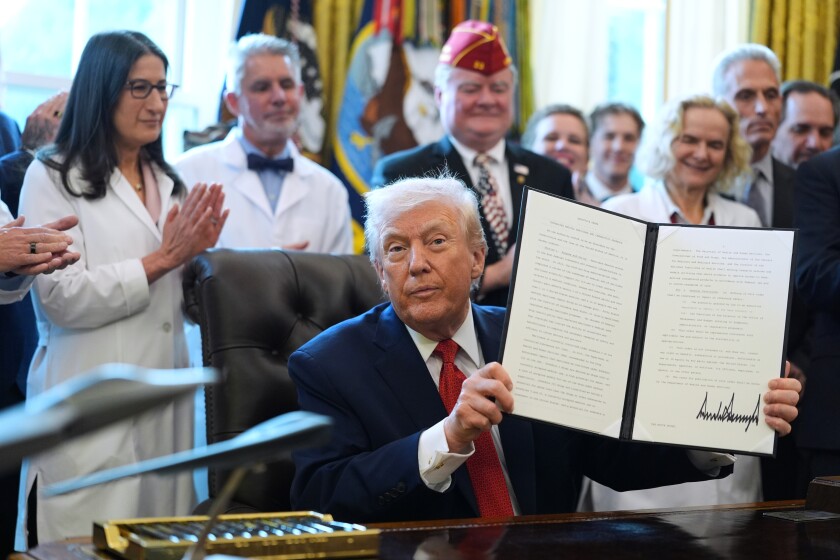
President Donald Trump has ordered the reclassification of marijuana from Schedule I to Schedule III of the Controlled Substances Act, a significant shift in federal policy that acknowledges the drug’s medical potential. This decision marks a notable change after decades of federal resistance, dating back to a 1988 ruling by Francis Young, then chief administrative law judge at the Drug Enforcement Administration (DEA). Young had concluded that marijuana should not be classified among the most dangerous substances, yet his findings were ignored for years.
The reclassification means that marijuana will no longer be grouped with drugs like heroin and LSD, which are considered highly dangerous with no accepted medical use. Instead, it will now share a category with prescription medicines, including ketamine and anabolic steroids. While this does not equate to full legalization, it reflects a growing acknowledgment of the drug’s potential benefits and a recognition that its risks have been exaggerated over time.
Marijuana has been classified as a Schedule I drug since 1970. This classification has made it difficult for researchers to study the drug’s effects and potential therapeutic uses. The DEA has historically rejected requests to reconsider this classification, including Young’s own ruling after a lengthy 16-year legal battle. Young argued that marijuana is “one of the safest therapeutically active substances known to man,” highlighting its accepted medical use in treating conditions like nausea related to chemotherapy and symptoms of multiple sclerosis.
The shift in classification follows a review by the U.S. Department of Health and Human Services (HHS), which was ordered by President Joe Biden. This review found “credible scientific support” for marijuana as a treatment for pain, nausea, and other medical conditions, leading to the conclusion that its dangers do not warrant a Schedule I classification. The HHS recommended that marijuana be controlled under Schedule III instead, a recommendation that Attorney General Merrick Garland proposed in May 2024.
Trump’s executive order aims to facilitate research into marijuana’s medical applications by easing the stringent regulatory requirements that accompany Schedule I substances. Nonetheless, it is crucial to note that this reclassification will not legalize medical use unless the Food and Drug Administration (FDA) approves specific cannabis-based products as prescription medications.
State-licensed marijuana businesses will remain illegal under federal law, although they may benefit from the reclassification. This change allows these businesses to claim standard deductions on their income tax returns, addressing a significant financial burden that has resulted in high effective tax rates for the cannabis industry. While Trump did not emphasize these benefits in his announcement, they could play a critical role in the financial viability of state-legal marijuana enterprises.
Over the years, public opinion on marijuana has shifted dramatically. Currently, 40 states have legalized the drug for medical use, and 24 of these also permit recreational use, reflecting a substantial change in societal attitudes. This has led to a growing conflict between state laws and federal prohibition, a stance that is increasingly unpopular among the American public.
In his announcement, Trump underscored that the order does not legalize marijuana in any form. While this statement is accurate, it highlights the ongoing complexities surrounding marijuana regulation in the United States. As the landscape continues to evolve, the implications of this reclassification will resonate across both the medical and commercial sectors, paving the way for further discussions on marijuana policy in the future.

Philadelphia Parks Launch Free Earth Month Events Starting April 1

Bradford’s Fish Fry Fridays Serve Community with Delicious Dinners

Trump Faces Growing Challenges Amid Rising Tensions with Iran

Scientists Probe the Universe’s Missing Topological Defects

Samsung Galaxy Watch 9 to Feature Larger 435mAh Battery

UConn Huskies Aim to Defend Title in 2026 NCAA Women’s Tournament

U.S. Littoral Combat Ships Dock in Malaysia Amid Regional Tensions

Healthy Choice Wellness Reports Quarterly Earnings, Shares Rise

Urgent News: Charles M. Payment Passes Away at 78 in Duluth

University of Hawaiʻi Joins $25.6M AI Project to Enhance Disaster Monitoring

Major Grant Enhances Cancer Care and Research in Hawaiʻi

Joleen Chaney, Beloved Journalist, Passes Leaving Lasting Legacy

San Francisco’s SFO to Welcome 16 Airlines with Nonstop Flights to Europe in 2026

Goldman Sachs Unveils 2026 Catalyst Playbook for Biotech Investors

Discover Top Business Smartphones for Professionals in 2026

Urgent Update: Tom Aspinall’s Vision Deteriorates After UFC 321

Texas Roadhouse Honors Veterans with Free Meal Vouchers

CD Projekt Red Confirms No Release for The Witcher 4 in 2026
-
Science9 months ago
University of Hawaiʻi Joins $25.6M AI Project to Enhance Disaster Monitoring
-
 Health8 months ago
Major Grant Enhances Cancer Care and Research in Hawaiʻi
-
 Top Stories9 months ago
Joleen Chaney, Beloved Journalist, Passes Leaving Lasting Legacy
-
 World7 months ago
San Francisco’s SFO to Welcome 16 Airlines with Nonstop Flights to Europe in 2026
-
 Business8 months ago
Goldman Sachs Unveils 2026 Catalyst Playbook for Biotech Investors
-
 Business8 months ago
Discover Top Business Smartphones for Professionals in 2026
-
 Top Stories9 months ago
Urgent Update: Tom Aspinall’s Vision Deteriorates After UFC 321
-
 Lifestyle9 months ago
Texas Roadhouse Honors Veterans with Free Meal Vouchers
-
 Entertainment8 months ago
CD Projekt Red Confirms No Release for The Witcher 4 in 2026
-

 Top Stories10 months ago
AI Disruption: AWS Faces Threat as Startups Shift Cloud Focus
-

 Health10 months ago
MIT Scientists Uncover Surprising Genomic Loops During Cell Division
-

 Entertainment10 months ago
Discover the Full Map of Pokémon Legends: Z-A’s Lumiose City