
Science
Researchers Map Sun’s Hidden Magnetic Interior for First Time

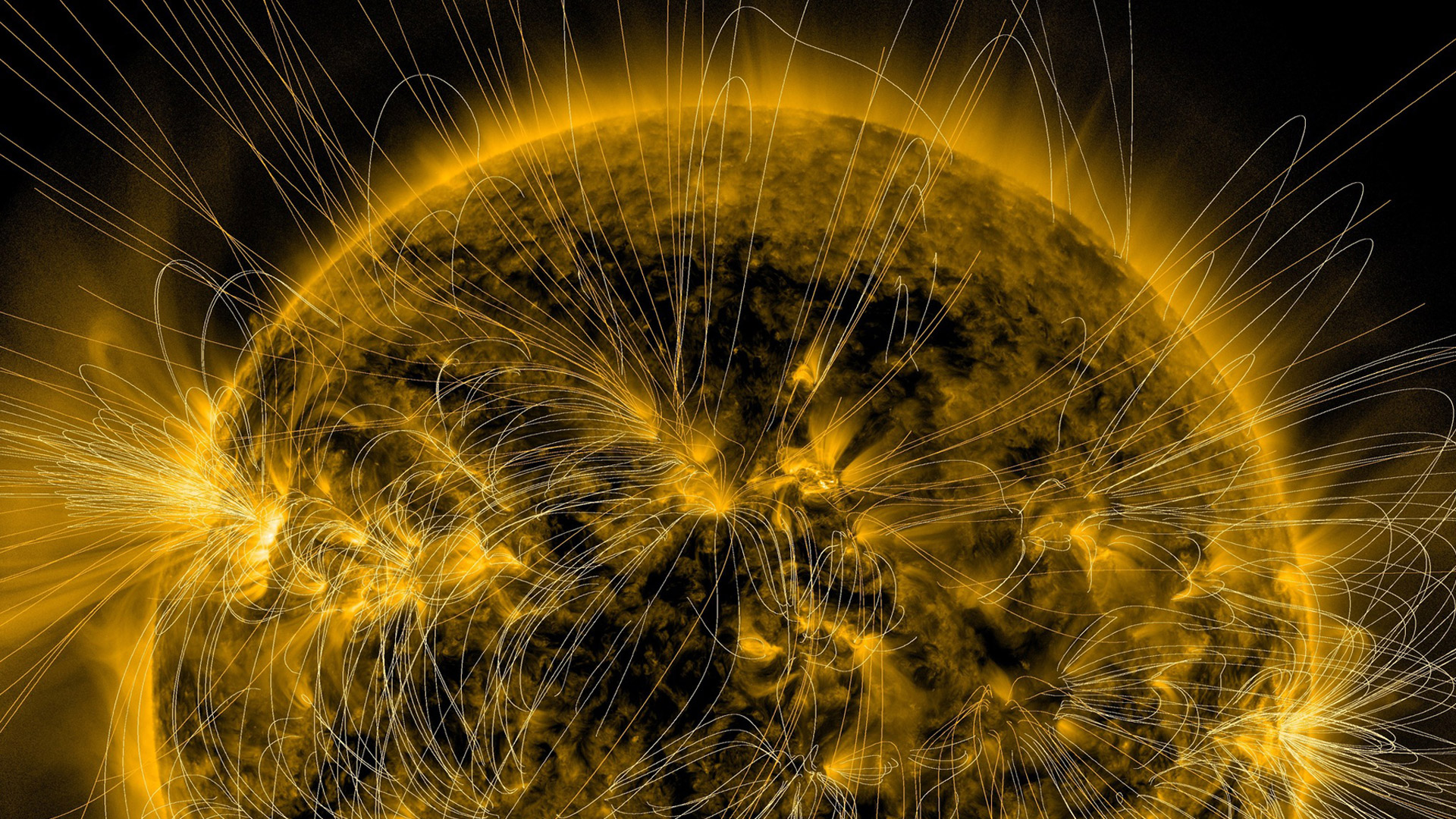
A groundbreaking study has reconstructed a three-dimensional map of the sun’s magnetic interior for the first time, utilizing nearly three decades of satellite data. This research provides new insights into the sun’s complex magnetic field dynamics, which have long remained elusive to scientists.
Understanding the sun’s magnetic field is crucial as it influences solar activity, including the appearance of sunspots and solar flares. These phenomena can disrupt satellite operations and power systems on Earth. Until now, most knowledge about the sun’s interior magnetic processes has relied on indirect measurements and theoretical models.
To achieve this significant advancement, researchers gathered daily magnetic field maps from solar satellites between 1996 and 2025. By using this extensive dataset, they created a sophisticated computer model that simulates the sun’s internal magnetic dynamics. The model continuously adjusted itself with the incoming surface data, allowing scientists to deduce likely magnetic structures beneath the sun’s visible surface.
The authors of the study emphasized the importance of their approach, stating, “Observationally, none of the techniques—including helioseismology—are able to provide an estimation of the interior magnetic field. We reconstruct, for the first time, the dynamics of the interior large-scale magnetic fields.” This innovative method marks a significant shift in solar research, as it allows for continuous and indirect monitoring of the sun’s interior.
To validate their model, researchers tested it against historical solar cycles, which typically last around 11 years. The model successfully reproduced several cycles observed during the satellite era, including the movement of sunspots from higher latitudes toward the equator, a key characteristic of solar activity cycles.
As a final test, the scientists allowed the model to predict solar activity without adding new data. Remarkably, it accurately anticipated significant solar events up to three or four years in advance. The researchers noted, “A strong correlation between the simulated toroidal field and sunspot number establishes our 3D magnetogram-driven model as a robust predictive model of the solar cycle.”
This achievement has profound implications. More reliable forecasts of solar activity based on the new model could enhance protection for satellites, reduce risks for navigation systems, and provide power grid operators with timely warnings about geomagnetic disturbances.
Yet, the effectiveness of this model depends on the continuity of long-term satellite missions. Researchers aim to refine their technique further, seeking to predict not just when solar activity will peak, but also where on the sun’s surface active regions are likely to develop.
The study is published in The Astrophysical Journal Letters, marking a pivotal moment for solar science and our understanding of the sun’s influence on Earth.

Philadelphia Parks Launch Free Earth Month Events Starting April 1

Bradford’s Fish Fry Fridays Serve Community with Delicious Dinners

Trump Faces Growing Challenges Amid Rising Tensions with Iran

Scientists Probe the Universe’s Missing Topological Defects

Samsung Galaxy Watch 9 to Feature Larger 435mAh Battery

UConn Huskies Aim to Defend Title in 2026 NCAA Women’s Tournament

U.S. Littoral Combat Ships Dock in Malaysia Amid Regional Tensions

Healthy Choice Wellness Reports Quarterly Earnings, Shares Rise

Urgent News: Charles M. Payment Passes Away at 78 in Duluth

University of Hawaiʻi Joins $25.6M AI Project to Enhance Disaster Monitoring

Major Grant Enhances Cancer Care and Research in Hawaiʻi

Joleen Chaney, Beloved Journalist, Passes Leaving Lasting Legacy

San Francisco’s SFO to Welcome 16 Airlines with Nonstop Flights to Europe in 2026

Goldman Sachs Unveils 2026 Catalyst Playbook for Biotech Investors

Discover Top Business Smartphones for Professionals in 2026

Urgent Update: Tom Aspinall’s Vision Deteriorates After UFC 321

Texas Roadhouse Honors Veterans with Free Meal Vouchers

CD Projekt Red Confirms No Release for The Witcher 4 in 2026
-
Science9 months ago
University of Hawaiʻi Joins $25.6M AI Project to Enhance Disaster Monitoring
-
 Health8 months ago
Major Grant Enhances Cancer Care and Research in Hawaiʻi
-
 Top Stories9 months ago
Joleen Chaney, Beloved Journalist, Passes Leaving Lasting Legacy
-
 World7 months ago
San Francisco’s SFO to Welcome 16 Airlines with Nonstop Flights to Europe in 2026
-
 Business8 months ago
Goldman Sachs Unveils 2026 Catalyst Playbook for Biotech Investors
-
 Business7 months ago
Discover Top Business Smartphones for Professionals in 2026
-
 Top Stories9 months ago
Urgent Update: Tom Aspinall’s Vision Deteriorates After UFC 321
-
 Lifestyle9 months ago
Texas Roadhouse Honors Veterans with Free Meal Vouchers
-
 Entertainment8 months ago
CD Projekt Red Confirms No Release for The Witcher 4 in 2026
-

 Top Stories10 months ago
AI Disruption: AWS Faces Threat as Startups Shift Cloud Focus
-

 Health10 months ago
MIT Scientists Uncover Surprising Genomic Loops During Cell Division
-

 Entertainment10 months ago
Discover the Full Map of Pokémon Legends: Z-A’s Lumiose City